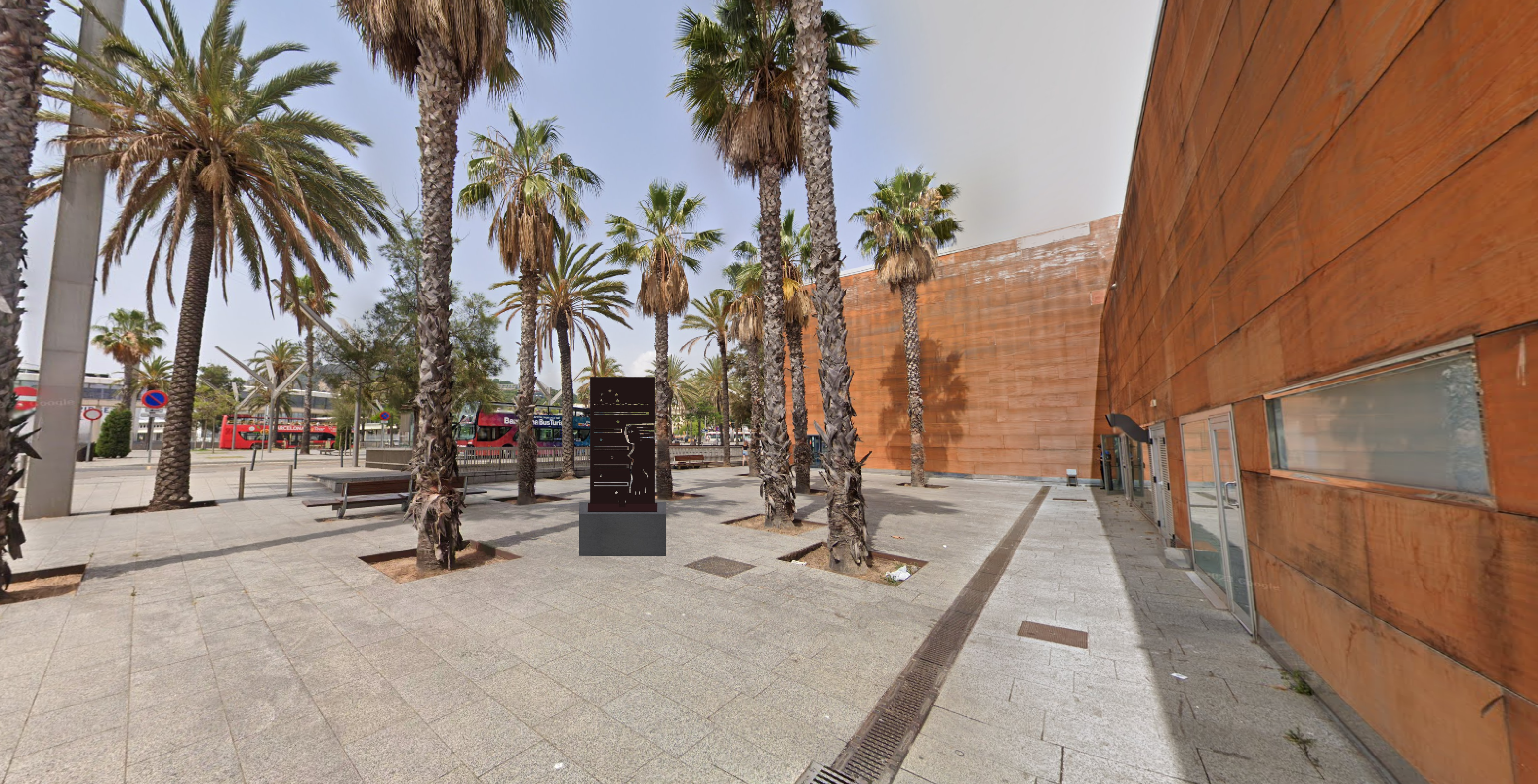
The Areté sculpture in Barcelona is part of a Mediterranean route of values connecting Barcelona, Civitavecchia, Palermo and Genoa.
Together, these cities tell the story of twenty years of education, cooperation and shared purpose across the sea.
Explore the route
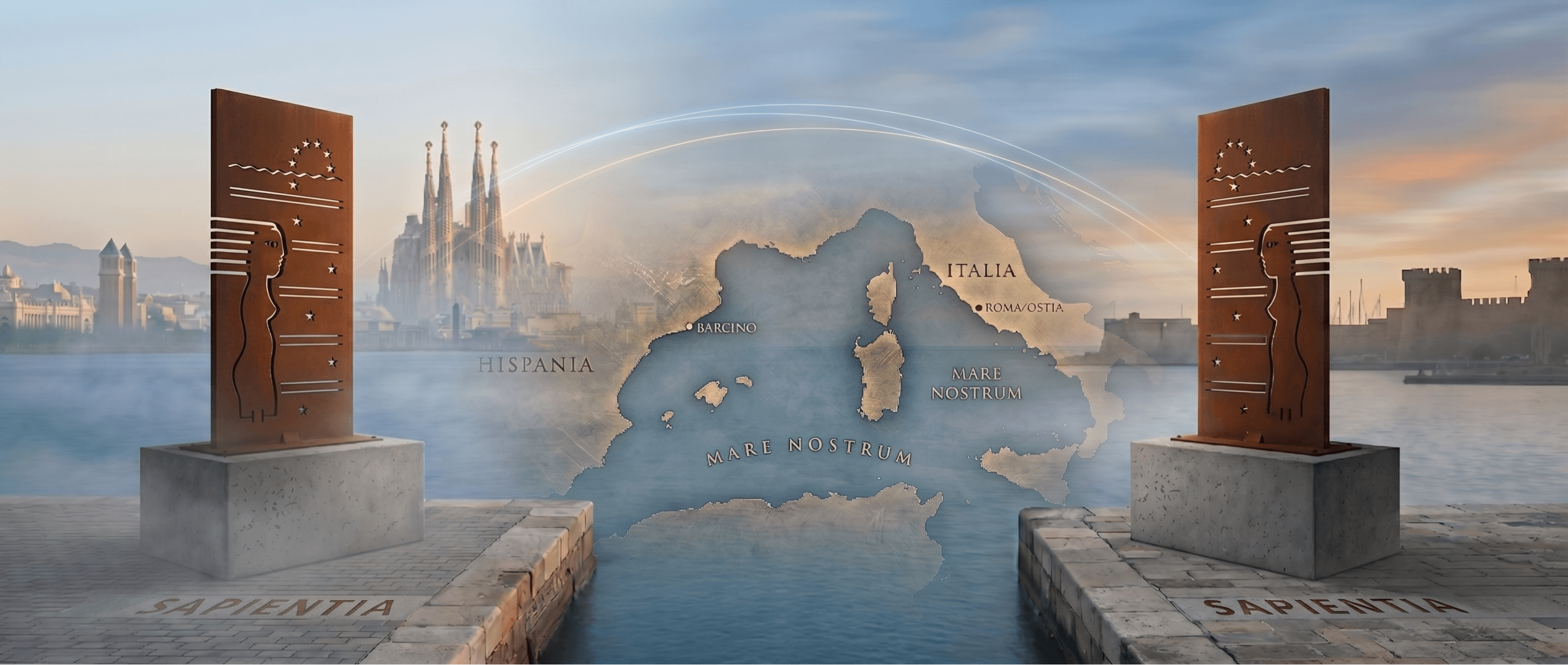
You are standing in Barcelona, at one point of a commemorative Mediterranean route connecting four port cities central to the Escola Europea’s story: Barcelona, Civitavecchia, Palermo and Genoa.
Barcelona and Civitavecchia are linked by twin Areté sculptures, facing each other across the Mediterranean. Palermo and Genoa also form part of this symbolic route, with sculptures that face each other and extend the same journey through the Escola’s founding port community.
Jardins de l’Areté
Twin Areté sculpture
Giardino dell’Areté
Twin Areté sculpture
Commemorative sculpture
Twin Areté sculpture
Commemorative sculpture
Twin Areté sculpture
José Luis Pascual (Barcelona, 1947) is a Catalan sculptor established in the Empordà since 1995, where he founded the Espai d’Art KM7.
The Areté sculptures were created exclusively for the Escola Europea using his technique of ferroflèxia: bending corten steel until the metal transforms from surface into body.
Working primarily in corten steel, Pascual’s sculptures explore movement, tension and symbolic forms connected to Mediterranean identity and human values.
Location
Jardins de l’Areté, Moll de Barcelona,
in front of the Terminal Drassanes building.
Inauguration
14 October 2026
Promoters
Escola Europea – Intermodal Transport
Autoritat Portuària de Barcelona
Twin sculptures
Giardino dell’Areté, Port of Civitavecchia
Tbc, Port of Palermo
Tbc, Port of Genoa
Mediterranean commemorative route
Barcelona · Civitavecchia · Palermo · Genoa
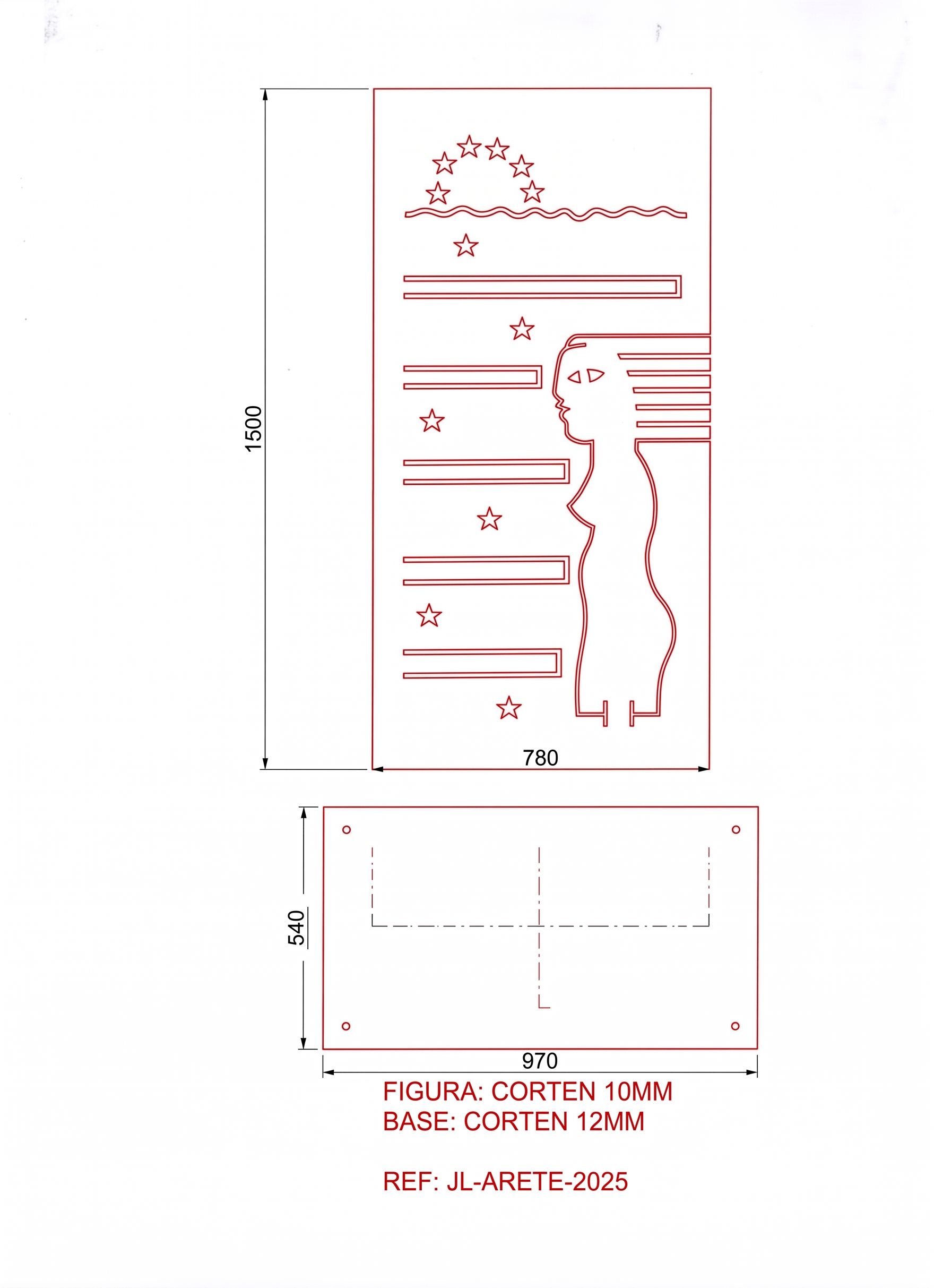
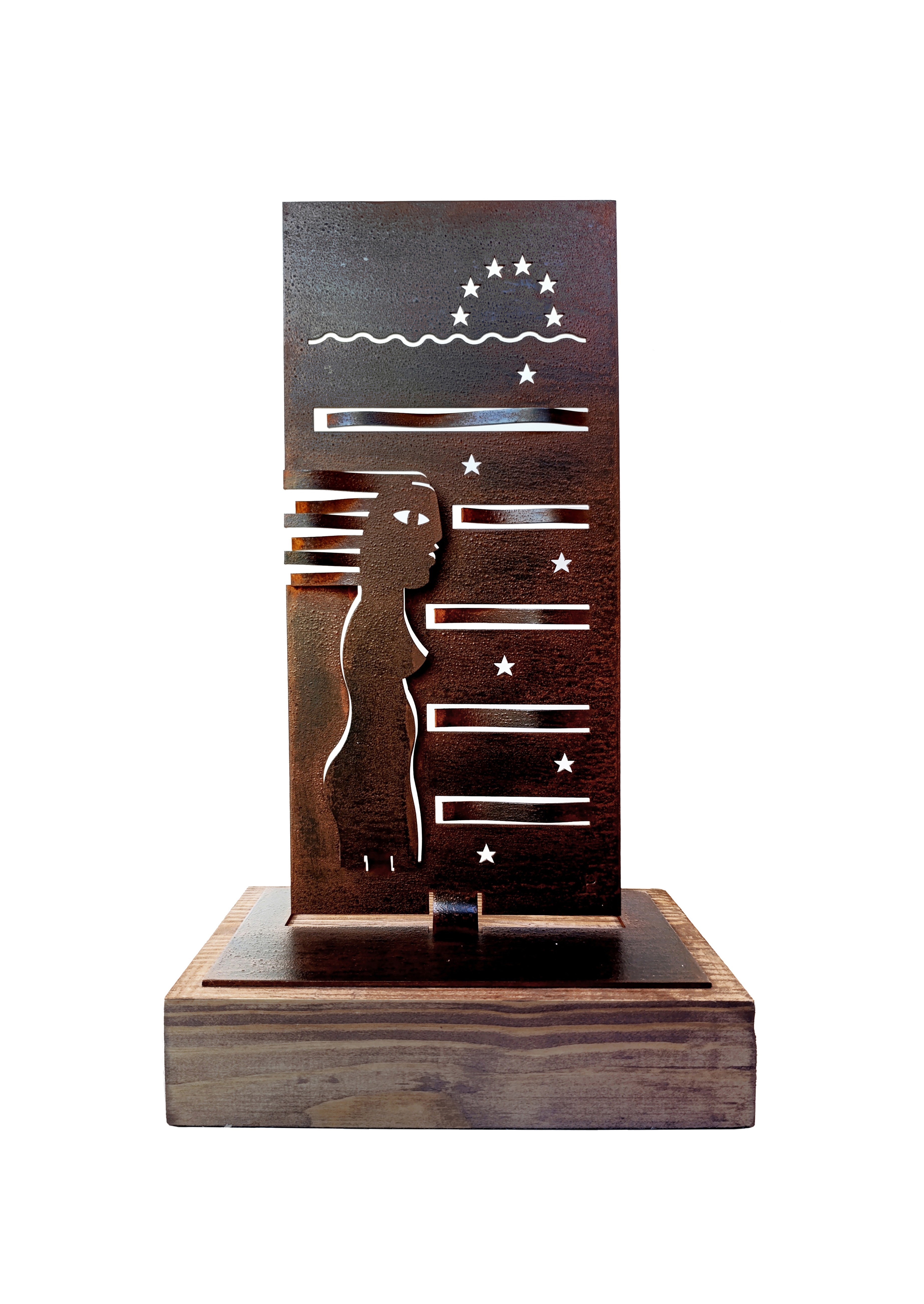
The Areté sculpture is an original work by José Luis Pascual, created exclusively for the Escola Europea. Made in Corten steel, it uses the artist’s technique of ferroflèxia: bending and forcing the metal until a flat sheet becomes a living form.
Its twins in Civitavecchia, Palermo and Genoa share the same origin and meaning. Together, they form the symbolic heart of the wider Mediterranean route.
At the centre of the sculpture appears Isis, goddess of wisdom. Around her, the stars, the sea and the Mediterranean partners give form to the symbolic language of the work.
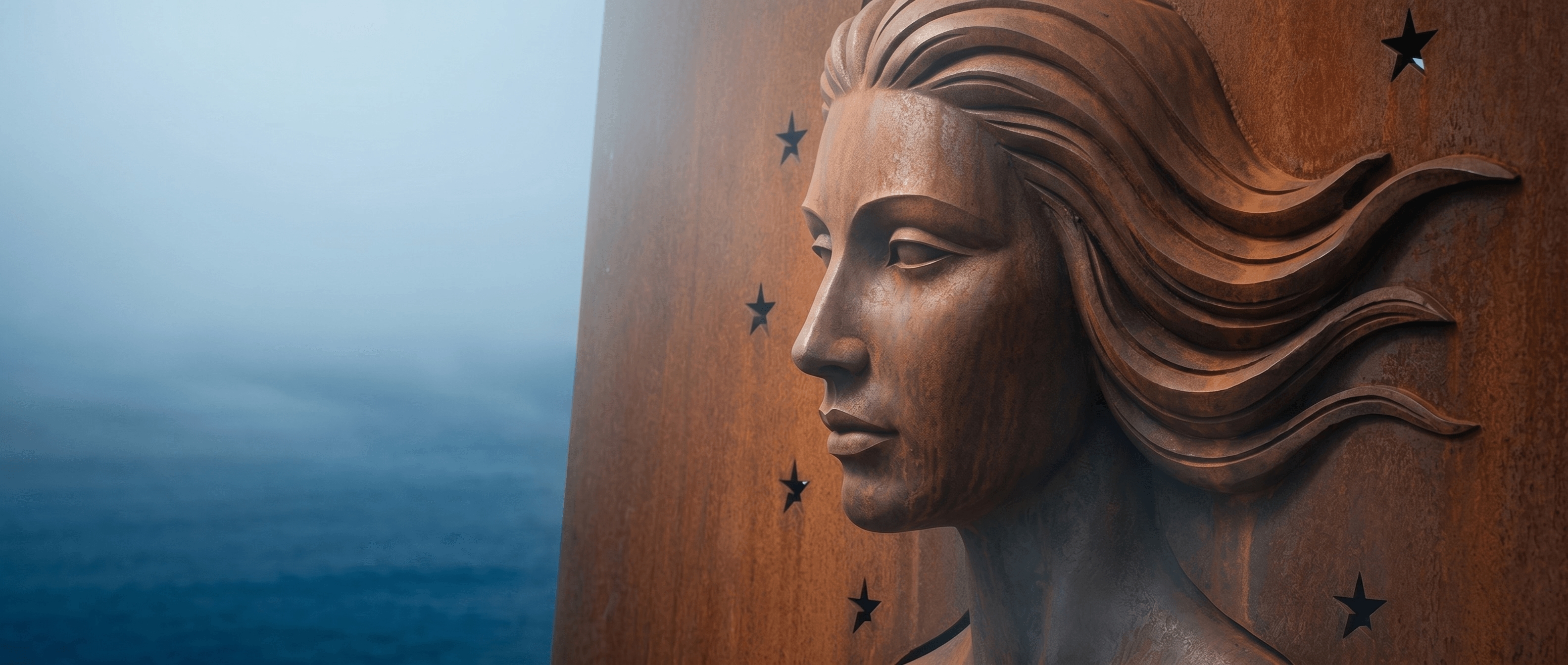
At the centre, Isis, goddess of wisdom, lights our way. Her face holds the beauty that adorns her; her hair in the wind, the strength that sustains her.
Above, six stars watch over the values that guide us: Imaginatio, Dialogus, Libertas, Opus, Fides and Sapientia.
At her feet stretches the Mediterranean, cradle of the culture that inspires our purpose, and in its waters shimmer the stars of the partners who sail with us.
These stars represent the six values of the Escola:
These reflected stars represent the founding partners of the Escola:
At the centre of the sculpture appears Isis, goddess of wisdom.
Her face evokes beauty, while her hair, moved by the sea breeze, symbolises strength and determination.
The Mediterranean is more than a background: it is the space that connects the Escola’s ports, partners, routes and educational mission.
The Areté sculpture in Barcelona forms part of a wider commemorative route connecting four port cities: Barcelona, Civitavecchia, Palermo and Genoa.
Barcelona and Civitavecchia are linked by twin Areté sculptures facing each other across the Mediterranean. Palermo and Genoa extend this symbolic journey, each with its own sculpture as part of the same shared route.
Together, the four sculptures create a visible line of knowledge, cooperation and Mediterranean dialogue between the ports that have shaped the Escola’s history.
Around the Moll de Barcelona and the Barceloneta, six sculptures and monuments form a symbolic route through the values of the Escola Europea.
Areté
José Luis Pascual
Jardins de l’Areté, Moll de Barcelona
The starting point of the route and a symbol of knowledge as a continuous learning process.
You are here.
Cap de Barcelona
Roy Lichtenstein
Moll de la Fusta
The ambition to seek new ways of doing things and enrich how they are realised.
Parella
Lautaro Díaz Silva
Moll de la Fusta
Dialogue among participants, allowing them to find ways to work together to improve society.
Monument to Joan Salvat-Papasseit
Robert Krier
Portal de la Pau
Self-determination, the foundation of the freedom to decide and build our future.
Monument to Ròmul Bosch i Alsina
Robert Krier
Moll de Bosch i Alsina
Work and effort, necessary to move the project forward and give form to shared ideas.
Ones
Andreu Alfaro
Between Plaça de les Drassanes and the World Trade Center
Commitment to nature and society, supporting logistics that are respectful of the environment and people.
Explore the educational projects, courses and international collaborations of the Escola Europea – Intermodal Transport.
Discover the Escola© 2026 Escola Europea - Intermodal Transport
Jardins de l'Areté 1,
Moll de Barcelona s/n
08039 Barcelona, Spain
Tel: (+34) 93 298 6070 | [email protected]
Legal Notice | Privacy Policy | Terms and Conditions
If you have a complaint, you may contact us at [email protected]. Alternatively, you may use the European Commission's Online Dispute Resolution platform.