A hugely successful fourth edition of the MOST Italy course in intermodal maritime logistics takes place in Italy

As in previous years, the Escola Europea – Intermodal Transport has concluded with great success another edition of the MOST (Motorways of the Sea Training) Italy course in intermodal logistics for Italian professionals. From 29 September to 2 October, 32 participants from Italy and Brazil attended this edition of the training.

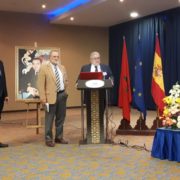
The inauguration ceremony was held at the Port Authority of Civitavecchia, seat of the ADSP of the Centre-North Tyrrhenian Sea and founding member of the Escola. Its president Francesco Maria Di Majo, accompanied by the Director of Harbour Security of the Ministry of Infrastructures, Mauro Coletta, have given the welcome to the participants and briefly introduced the present and the near future of intermodality in the Mediterranean and the fundamental importance of training in order to exploit the whole potential of the motorways of the sea.

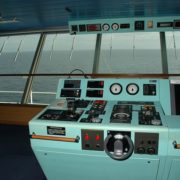
Following the first theoretical classes on land, the large group of participants, accompanied by the teachers of the course, all of whom were experts in short sea shipping (SSS), boarded the Grimaldi Lines Ro-Pax vessel CRUISE BARCELONA, en route to Barcelona, along one of the motorways of the sea studied in the course.

Once again the Escola Europea was able to count on the collaboration of RAM (Rete Autostrade Mediterranee) Logistica – Infrastrutture – Trasport and ALIS (Associazione Logistica dell’Intermodalità Sostenibile), as well as the support of the Ministry of Infrastructures and Transport, Confitarma and Assoporti  for the organisation of the training.

During the four days of the course, the participants studied logistics and transport issues through theoretical lectures and practical workshops.

Andrea Campagna, from the Research Centre for Transport and Logistics of La Sapienza University in Rome, offered an in-depth analysis of transport costs, service times and other competitive factors to open the debate on the feasibility of a sustainable alternative to short sea shipping; Francesco Benevolo, director of RAM SpA, presented a wide overview of the motorways of the sea in Europe and explained the European Union’s environmental policy on transport, paying special attention to the fiscal incentives MAREBONUS and FERROBONUS, designed for intermodal transport; Nicolò Berghinz, representative of ALIS, presented some real cases of companies affiliated to the association that have successfully focused on intermodality to grow in the world of transport. The shipping companies and ports involved in the motorways of the sea between Spain and Italy explained the functioning of their infrastructures dedicated to short sea shipping: for the Port of Barcelona, Ana Arévalo, Commercial Manager specialized in SSS; for Grimaldi Lines, Commercial Manager Marcello Donnarumma; for GNV, Alessandro Feniello, Sales Freight Manager of GNV and for the ADSP of the Northern Central Tyrrhenian Sea, Giovanni Marinucci, Head of International Projects, who offered a presentation of the Port of Civitavecchia.

The contents of the course have been custom designed for the Italian professionals who attended the course, who came from different transport and logistics companies, four port system authorities and two higher technical institutes (ITS) in the Mobility area.

The aim of the training is to present participants with all the benefits to achieve by incorporating motorways of the sea as a key element in building efficient and sustainable supply chains. In addition to the theoretical lessons and workshops, the participants worked hard to solve a case study and were able to observe closely the infrastructure and equipment involved in intermodal operations. Finally, networking activities were organized to facilitate the development of networks of contacts between professionals and experts in the Italian sector who participated in the course.

The comments received from the participants were very positive. The level of satisfaction in this, as in the past, edition was very high: “I feel lucky to have been able to learn with and from professionals in the field, and with a spectacular organization”.

The Escola would like to thank all its founding members (Port de Barcelona, ADSP of the Northern Central Tyrrhenian Sea, Ports of Genoa, Grimaldi Lines and GNV) for their usual cooperation and generosity.

The dates for the fifth edition have already been set: from 5th to 8th of October 2019.

This year the Escola is also planning a course in intermodal maritime logistics for Spanish and Portuguese professionals, MOST Iberia, to be held from 20 to 23 October 2018.

European Parliament strengthens ‘polluter pays’ principle for ship waste management

The Transport Committee of the European Parliament adopted today the Meissner report on the Port Reception Facilities and gave a mandate to the Rapporteur to start negotiations with the Council to finalise the text of the new law.

The European Sea Ports Organisation (ESPO) welcomes in particular the proposal to strengthen the ‘polluter pays’ principle by discouraging the delivery of unreasonable quantities of garbage, including dangerous waste, for a fixed fee. This proposal will better protect marine environment by increasing the quantities of waste delivered at ports. It aims to make sure that ships deliver their garbage at every port call and don’t skip waste deliveries to save time. It finally avoids that ports have to pay the extra costs of delivering amounts of garbage that exceed the normal quantities generated between two ship calls.

“The Transport Committee of the European Parliament has clearly voted in favour of a policy that incentivises ships to deliver waste generated on board in the ports. It also encourages ships to limit the waste at the source by preventing ships to deliver unreasonable amounts of waste without paying for it. We believe that the text adopted strikes the right balance between efficiency and responsibility and strengthens the ‘polluter pays’ principle. We are very thankful to the Transport Committee for their very balanced position in what has been from the beginning a technical and complicated piece of legislation. We count on the rapporteur and the negotiating team of the Parliament to defend this outcome in the further negotiations with the Council,” says Isabelle Ryckbost, ESPO’s Secretary General, on the outcome of the EP vote.

However, ESPO regrets that the Parliament decided to make rebates mandatory for green management of waste on board of ships. While encouraging ships to work on sustainable waste management, ports believe the decision to give rebates must be taken at port level. Rebates are generally applied to address the local environmental challenges. In some areas, waste pollution is a great environmental concern while in others it is air quality and emissions. Furthermore, mandatory rebates disregard the existence of different business and governance models in ports across Europe.

EU to invest nearly €700 million in sustainable and innovative transport

The European Commission has proposed to invest €695.1 million in 49 key projects to develop sustainable and innovative transport infrastructure in Europe across all transport modes. Selected projects will provide infrastructure enabling greater use of alternative fuels and electric cars, modernise Europe’s air traffic management, and further develop waterborne and rail transport.

EU Commissioner for Transport Violeta Bulc said: “Our investment plan for Europe is delivering: today we are proposing to invest €700 million in 49 key transport projects through the Connecting Europe Facility (CEF). These projects are concentrated on the strategic sections of Europe’s transport network to ensure the highest EU added-value and impact. This will allow us to further accelerate our transition to low-emission mobility across Europe, and firmly deliver on the EU’s agenda for jobs and growth. We expect it to unlock a total of €2.4 billion of public and private co-financing.”

The largest part of the funding will be devoted to modernising European air traffic management (ATM – €290.3 million), developing innovative projects and new technologies for transport (€209.5 million), as well as upgrading the railway network, maritime connections, and ports and inland waterways (€103.6 million). In supporting the selected projects, the Commission is firmly delivering on the objectives outlined in its Clean Mobility package.

Over €250 million of CEF funding will be invested in 26 projects dedicated to developing new technologies in transport notably promoting alternative fuels, such as:

  • greening the maritime transport link between Swinoujscie port in Poland and Ystad port in Sweden;
  • deploying hydrogen public transport infrastructure in Denmark, the UK and Latvia;
  • building a network of bio-liquefied natural gas stations on roads connecting southern Spain and eastern Poland, via France, Belgium, the Netherlands and Germany;
  • developing zero-emission public transport services for Amsterdam airport, as well as electrifying urban and regional bus routes in Croatia, Italy, Slovenia and Slovakia.

The selected projects will also contribute to the establishment of a Single European Sky via modernising European air traffic management in 23 EU Member States and Serbia, the upgrading of the Ampsin-Neuville lock complex on the Middle Meuse river in Belgium, and the upgrading of the maritime ports of HaminaKotka and Leixões.

An additional €450 million is made available to finance alternative fuel infrastructure through the InnovFin Energy Demo Projects (EDP) and CEF Debt Instrument. They are managed by the European Investment Bank.

Background

All proposed projects were selected for funding via two competitive calls for proposals, open to projects in all EU Member States:

The 2017 CEF Transport Blending call launched on 8 February 2017, takes an innovative approach, making available an indicative budget of €1.35 billion of EU grants, to be combined with financing from the European Fund for Strategic Investments (EFSI), the European Investment Bank (EIB), National Promotional Banks or private sector investors. Some 69 applications, requesting a total of €1 billion in co-funding, were received by the second deadline. Of these, 35 projects were selected, totalling €404,8 million. Previously, 39 projects had been selected for funding, totalling € 1 billion in CEF Blending funding.

The CEF Transport SESAR call launched on 6 October 2017 aims to modernise ATM in Europe and provide a high performing ATM infrastructure that will enable the safe, efficient and environmentally friendly operation and development of air transport. The CEF Transport SESAR call was open for project proposals on the deployment of new and mature technologies and practices that support harmonised ATM systems and standards in Europe. Some 33 applications requesting €406.9 million were received, out of which 14 projects were selected, totalling €290.3 million.

The EU’s financial contribution comes in the form of grants, with different co-financing rates depending on the project type. Under the CEF programme, €23.2 billion is available for grants from the EU’s 2014-2020 budget to co-fund TEN-T projects in EU Member States. Since 2014, the first CEF programming year, there have been four yearly waves of calls. In total, CEF has so far supported 641 projects with a total amount of €22.3 billion.

Next steps

Following EU Member States approval of the proposal, the Commission will adopt a formal decision in the coming weeks. The Commission’s Innovation and Networks Executive Agency (INEA) will then sign the grants with the project beneficiaries by January 2019.

Source: DG-MOVE

Artificial intelligence: Ports are beginning to take up positions

Artificial intelligence (AI) is an affordable technology, although it is only slowly being introduced into the business sector. Thus far, it has primarily been used to improve sales prediction techniques, but its potential applications are infinite and include lowering maintenance costs, improving product quality, planning manufacturing and increasing service level. In the sphere of transport, AI opens up a host of possibilities. Will the ports take advantage of them?

Today, the ports of Hamburg, Rotterdam and Singapore have already started to develop AI tools to improve predictions of maritime and land transport operations. Specifically, Hamburg has created a decision-making support system based on a predictive model of the behaviour of land transport. The model takes historical data, and using deep learning techniques and neural networks, it offers detailed predictions of the times when lorries should reach terminals. Based on this, the system notifies the lorry drivers of the terminal entrance times, and it gives the terminals a dynamic forecast of the workload they will have according to the changes in the surrounding conditions (road and access route saturation, real ship arrival time, degree of terminal saturation, etc.).

HOW DOES DEEP LEARNING WORK?

Deep learning and neural networks are two of the machine-learning methods which have come to the fore the most in recent years. They are inspired by the way neural networks work in the brain. They transform the entry values, layer by layer, until the value of the variables that they are trying to predict is found. Even though the results of neural networks are quite satisfactory, they need vast amounts of data to learn, and learning times are long (days or even weeks). Natural language processing, image pattern recognition and voice processing are the main success stories of deep learning. Thus, the evolution of data collection and management has to include the following levels: recording, analysing, simulating, predicting and finally recommending. Based on that, new-generation ports are expected to apply predictive and prescriptive analysis techniques as tools to support decision-making when planning the transport of the actors in the port-logistics chain. And this does not only include lorries, since the same transport logistics that it applied on motorways can also be applied to any means of transport (railway, maritime or river).

New-generation ports are expected to apply predictive and prescriptive analysis techniques as tools to support decision-making when planning the transport of the actors in the port-logistics chain.
The digital transformation in the port and the logistics chain entails huge amounts of data, many of them in real time. The competitiveness of future ports will largely depend on their ability to make use of this information. With AI tools that enable them to take advantage of the potentiality of this vast trove of data, the decisions taken by the managers will be higher quality, shared and generated more quickly, so they will likely optimise the time, cost and reliability of the operations in port-logistics environments. In a complementary fashion, all of this will end up leading to more flexible, real-time operations management. AI has reached the world of transport, and it is here to stay. The ports which realised its benefits and potentiality to change the sector first will unquestionably see operational efficiency gains compared to their competitors. Ports that already have advanced systems that allow them to gather a significant amount of data (Port Community Systems, Port Management Systems and Terminal Operating Systems, among other systems) will be the best poised to successfully incorporate the tools offered by artificial intelligence.

Ports that already have advanced systems that allow them to gather a significant amount of data will be the best poised to successfully incorporate the tools offered by artificial intelligence

THE ORIGINS OF ARTIFICIAL INTELLIGENCE

Even though it seems like a recent concept, the origins of artificial intelligence date back to the Greeks. Aristotle (384-322 BC) was the first to determine a set of rules that partly describes the way the mind works to reach rational conclusions, and Ctesibius of Alexandria (285-222 BC) built the first self-controlled machine, a water-flow regulator (rational, but without the ability to reason). John McCarthy, Marvin Minsky and Claude Shannon coined the term artificial intelligence at the Dartmouth Workshop (USA) in 1956 to refer to the “science and inventiveness of making intelligent machines, especially intelligent calculation programmes”. Where these three scientists missed the mark was in their prediction of when the first smart machines would arrive. They trusted that by the 1970s we would be surrounded by artificial intelligence. However, the majority of tech companies did not decide to make significant investments in this field until the 1990s and 2000s, in a bid to improve the processing and analytical capacity of the vast amounts of data which were being generated in the new digital world. In fact, AI was definitively enshrined in 1997, when IBM demonstrated that an IT system was capable of beating a human at chess. And it wasn’t just any human; it was the world champion, Garry Kasparov. The supercomputer was called Deep Blue, and it marked the turning point when industrial technology and society at large became aware of the real importance and possibilities of artificial intelligence.

Source: PierNext 

Three Considerations for Smart Port Collaboration

Ports that want to become ‘smart’ need to use technologies that automatically adapt to changing situations.

However, for that to happen, there has to be a change in attitude when it comes to collaboration, which is dependent on key players — who may be in competition with one another — agreeing on methods of creating more visibility throughout the supply chain.

Here are three arguments from authors of technical papers in the Edition 78 of the Port Technology Journal that show how and why the attitude to such practices may be changing.

1# Digital Tools for Next Generation Workers: Adam Yaron, CEO, FAST Applications

The next generation of people entering the profession have the expertise to use the latest online platforms and tools, which focus on process and managing costs and look to automate and streamline processes, build intermodal relationships, improve customer satisfaction, and maximize opportunities for cost savings.

A digital freight forwarder must offer a range of digital services to the 21st-century customers.

The next step is to create a social supply chain management where strong alliances can be created by networking and sharing data with freight partners online (agents, customers, suppliers, carriers, etc.), which in turn creates a stronger bond and connection to compete as a group.

2# Port Community Connectivity: Chris Collins, Chief Operating Officer, Containerchain

Major port centres including Antwerp, Hamburg, Los Angeles, Long Beach, Rotterdam, Singapore and others, plus shipping line and global terminal operators looking to get more embedded in the supply chain ‘beyond the gate’, are embarking on digital initiatives to capture, harvest, pool and share more data in more collaborative, real-time ways, with maritime and landside logistics stakeholders.

Singapore has recently provided two significant examples of this strategic direction under its National Trade Platform – with plans to connect over 10,000 of its existing registered users to a single independent Transport Integrated Platform (TRIP) that has already connected a large majority of the landside containerized supply chain, and in doing so, delivered significant operational and economic benefits to its stakeholders.

Balancing out platform competition and collaboration, international and localized solutions, closed and open offerings and free market choice against regulatory oversight is a very difficult challenge, but not one that can be avoided if we all want to reap the benefits of digital collaboration.

3# Working as One: Derek Kober, VP Marketing, Navis

The first step to tackle the fundamental lack of visibility in the industry and achieve joint success among key stakeholders is the broader sharing of critical shipment information across the supply chain.

In Navis’ report, surveyed executives echoed this sentiment, reporting the following:

• Agree on the need for stakeholders to operate with a common set of data (97% important; 85% very important)

• Believe the adoption of new technologies is crucial to enabling real-time collaboration (98% important; over 50% very important)

• Believe they will see substantial improvement in operational performance once real-time collaboration is achieved (one-third predict gains over 75%; over half expect gains of at least 50%)

Both voice and data communications are vital to the future of smart port operations.

Automation, collaboration and safety at ports and terminals are all dependent on digital, connected systems that allow mission-critical practices.

Source: Port Technology

The Escola and FONASBA sign collaboration agreements with the first partners for the SAILNET Programme

On the 28th of September 2018, the director of the Escola Europea – Intermodal Transport, Eduard Rodes, travelled to Naples to sign an agreement of collaboration with the partners of the SAILNET Programme: Mr. Gian Enzo Duci from FEDERAGENTI (Italy), Mr. A. Mantrach from APRAM (Morocco), Mr. António Belmar from AGEPOR (Portugal) and Mr. Walid Dziri from All seas Shipping Agency (Tunisia). The meeting took place during the Naples Shipping Week assembly dedicated to “Port&ShippingTech”.

The signature of the agreement constitutes the kick-off of the Escola’s new exchange programme: SAILNET – Ship Agents Interchange Learning Network. This project has the aim to implement a unique network of knowledge made of courses and internships for young and promising maritime and logistics managers.

SAILNET is an international training and exchange programme successfully established today in 6 countries (Spain, Portugal, Italy, Morocco, Tunisia and Argentina). The course is an interactive, hands-on series of sessions designed to provide young professionals with knowledge and leadership skills, with the content of the sessions building on each other.

Promoted by FONASBA/ECASBA and ESCOLA EUROPEA with the support of the national shipping agents associations of the involved countries, the main aim of SAILNET Programme is to implement an Exchange programme, which may lead to possible collaborations between the companies and firms of the internships. This kind of international and intercultural approach also fosters the creation of new and lasting relationships and, more widely, of a network of people from around the world that could one day result in solid professional and collaborating bonds.

Check out the website http://www.sailnetprogramme.com to find out more about the SAILNET Programme.

For more information on the Escola you can write to [email protected].

ESPO calls for more ambition on the harmonisation of data – European Maritime Single Window

ESPO welcomes the Commission’s proposal for a Regulation establishing a European Maritime Single Window environment (COM2018 278 final). For European ports though, reducing the administrative burden in maritime transport and facilitating trade is a top priority. ESPO wants more ambition on the harmonisation of data definitions and data sets, while maintaining the existing reporting systems. This would further reduce the administrative burden and would facilitate trade. This is the guiding principle of ESPO’s position paper in response to the Commission’s proposal for a Regulation establishing a European Maritime Single Window environment which was published on 17 May.

For European ports, the first priority should be to simplify administrative procedures by ensuring that the same data sets can be reported to each competent authority in the same way. In this context, ESPO welcomes the establishment of a harmonised data set. However, there is still work to be conducted to define the data set in detail – both data elements and data definitions. At the same time, ESPO agrees with the proposal to allow Member States to introduce or amend data requirements as in some cases ports might need to ask additional data to respond to exceptional circumstances. In that respect, this flexibility should also be extended to individual competent authorities.

ESPO in particular welcomes that the proposal builds upon the existing National Single Windows, while also allowing the reporting to be carried out through the Port Community Systems (PCS). The proposal rightly acknowledges the well functioning of PCS’s and the investments already made. European ports highlight that any solution should be technology neutral and should focus on data harmonisation.

Furthermore, a governance mechanism for the National Single Window should be established giving it the competence to store and redistribute data to the respective authorities. Otherwise, the proposal would not result in trade facilitation and simplification, but would just shift the burden from the ship side to the competent authorities.

Finally, ESPO considers the “reporting once principle” a valid means to achieve the objectives of the proposal, provided that it covers the re-use of data that do not change between subsequent port calls and takes into consideration the limited amount of data to be reused between authorities at a given port call.

“We appreciate that the proposal acknowledges to a large extent and builds upon the current reporting environment in maritime transport. Across the sector there is a strong wish to simplify and reduce the administrative barriers. We can however not ignore the mandatory reporting obligations shipping, ports and other authorities need to comply with by national, European and international law. We believe that working on harmonised data standards is the only way forward to make the reporting more efficient. Common standards are far more important than harmonised systems. Technology is moving fast. We need a legislative framework that allows the use of already well functioning systems and the uptake of new technologies. A reporting environment should not undermine the ongoing digitalisation processes, and encourage the uptake of new solutions in a technology neutral way,” says ESPO’s Secretary General, Isabelle Ryckbost.

The proposal is currently being discussed in the Council and the European Parliament. MEP Deirdre Clune (Ireland/PPE) has been appointed as rapporteur in the Transport committee. ESPO looks forward to working with the Parliament’s rapporteurs and the shadow rapporteurs, the Austrian Presidency, the Council and the Commission in view of achieving a new and efficient legislative framework that would further reduce the administrative burden in maritime transport and facilitate trade.

Source: ESPO Press Release

Generating value for society

I would like to take this first opportunity offered to me as the President of the Escola Europea to address all of the alumni and readers of the ODISEO newsletter.

I took up the post of President of the Port of Barcelona a few weeks ago, and in this time I have been experiencing this multifaceted reality of the Port – or ports, because there are more than one – its different activities and projects and the people that comprise its community.

From strategy to infrastructures

In the development of the duties that have been entrusted to me, I keep in mind the mission of the institution that I represent: the Port itself. In its most traditional version, it is the body responsible for the development, construction and management of new infrastructures. It is also responsible for guaranteeing services that facilitate the competitiveness of its customers, and for creating value for society: infrastructures and services of the society to which we are indebted.

The final goal is clear and we have many ways to work towards its achievement. The strategic axes that will guide our development in the coming years are sustainability and innovation.

At the same time, the Port needs to strengthen connectivity with its terrestrial and maritime hinterland in order to increase the agility of the logistics chains that pass through the port area.

On the terrestrial side it is necessary to finish road and rail infrastructures that grant access to the port, to increase its current capacity and improve connections, both with the rest of the peninsula and with France and the rest of Europe.

In the maritime dimension of the hinterland, the Motorways of the Sea must play a fundamental role. Our connections with Italy and with the Maghreb have to be developed to allow for a greater agility of the passage of goods and improved door-to-door services. The Maghreb is today a key region in Europe’s construction project. Its development is a necessary element to achieve the stabilisation of the region.

It should be noted here that in both rail and maritime services, an acceptable solution must include both of the nodal infrastructures and transport corridors that connect them. The final solution depends on everyone involved, so doing it right at the port is no longer enough. It must be done well from beginning to end. The port can make the investments within its territories, but it becomes necessary to have equivalent infrastructures present in the destination nodes. This requires a different action that depends on third parties, which in itself poses difficulties and uncertainties.

A part of the solution must come from the development of transport networks that arise from the design and implementation of the Trans-European Transport Network, so that they can be extended and integrated with those of the rest of the Mediterranean countries. This Trans-Mediterranean network must be the engine of change in the region.

From infrastructures to logistics communities

Once we have the infrastructures, it is necessary to develop high quality and competitive maritime and railway services. Customer-oriented logistics communities, in which competitiveness, quality and proactivity in the management of services and efficiency are the main axes of the action.

We need ports that work and are built as a team, especially in terms of collaboration between public administrations and private operators. Two worlds that seek to establish a dialogue and cooperation to harmonise their interests and activities. Customs, inspection services, police … Each one with its obligations and responsibilities is looking for a way to respond to customers, while continuing to innovate and find better and more effective ways to preserve the environment as a source of wealth and development of the societies to which they must provide services to.

From logistics communities to the people

Complex infrastructures that provide complicated services, are innovative and sustainable, and contain competitive logistics chains in an uncertain and changing environment are not easy to maintain. Finding the people capable of doing it isn’t either.

The ports, in their current state, with the collaboration of the training centres, can be the organisations that facilitate the development of people in the sector, provide quality training and the develop the competencies that allow effective management of operations and ultimately lead to customer satisfaction. Generating value today goes through the recruitment of talent, which in turn happens to employ and retain the people capable of providing it.

Talent can be bought or built. For the first, money is needed. For the second, it takes vision, conviction, determination, patience and perseverance. And the results at the end are not the same. The first solution is ephemeral. The second is consistent and durable. We need to train the best professionals to help build the best port in the world in the broadest sense of the term.

We can buy creativity and innovation, but it is better to have creative people with the capacity and desire to innovate. We can apply environmental measures to improve sustainability, but it is better to have people convinced of and dedicated to sustainability.

The Escola can and must help advance on this path that tries to maximise the immediate and universal value for the society. I hope I can help achieve these goals that will allow us to build a better world for all.


Mercè Conesa
President
Escola Europea – Intermodal Transport

Ports Announce Climate Change Initiative

A group of the world’s leading port authorities have announced the launching of the World Ports Climate Action Programme, an international initiative with the objective of fighting climate change.

It will focus on a number of key areas, all based around improving supply chain efficiencies and cutting emissions. Signatories include the port authorities of Hamburg, Barcelona, Antwerp, Los Angeles, Long Beach, Vancouver and Rotterdam.

These will include accelerating the development of commercially viable sustainable low carbon fuels for maritime transport and infrastructure for electrification of ship propulsion systems.

The agreement will also concentrate on pursuing efforts to fully decarbonize cargo-handling facilities in ports, and research other renewable power 2-ship solutions.

Read more about cliamte change and sustainability in ports by reading a Port Technology technical paper

In a joint statement, the authorities of the Port of Rotterdam and the Port of Antwerp urged all companies in the shipping industry to reaffirm their commitment to the Paris Agreement, a global initiative aimed at combatting climate change.

Allard Castelein, CEO of the Port of Rotterdam Authority, and Jacques Vandermeiren, CEO of the Port of Antwerp Authority, commented on the Programme: “The Paris Agreement has set a clear target: we need to limit global warming to well below 2°C.

“It is vital in this context to reduce the emissions generated by maritime transport. As critical hubs in the global maritime transport network, I am convinced that ports can make a significant contribution.

“I am pleased to see that international port authorities have taken on a leading role in this area, committing to collaborative projects that can further advance the decarbonization of the maritime transport sector.”

Source: Port Technology

The Motorways of the Sea to connect Africa to the European shores

This autumn the Escola Europea – Intermodal Transport, in conjunction with the National Agency of Ports of Morocco (l’Agence Nationale des Ports – ANP) will organise a conference on the motorways of the sea (MoS) as new tools towards logistics development in Africa. The event will take place on the 3rd of October in Casablanca, Morocco, and it will bring together government representatives and directors of logistics companies in the region, as well as heads of training centres.

The conference will aim to raise awareness among local professionals of the practicalities and the benefits of MoS and intermodal transport as tools for sustainable development and job creation in the logistics sector. Existing short sea shipping services will be presented, alongside descriptions of the Escola’s activities that extend to the African continent.

The Escola’s founding partners, the Ports of Barcelona, Roma and Genoa, and the shipping lines GNV and Grimaldi Lines, are sponsoring the event, with the collaboration of the ANP and the Union for the Mediterranean (UfM).

Opening the conference, the director general of ANP Mrs Nadia Laraki, alongside Mrs Amane FETHALLAH, Director General of the Merchant Navy and Mr Francesc Carbonell from the UfM, will introduce the intermodal transport solutions existing between the European and African shores. This will be followed by three panels that will focus on innovative training for intermodality, infrastructures for intermodal development, and the different actors from the motorways of the sea respectively. The language of the conference will be in French.

This event in organised in the framework of the Escola’s TransLogMED project. The long-term objective of the project is to foster the development of the motorways of the sea between the Mediterranean countries, which will in turn help promote inclusive growth and youth employability, as well as sustainable development in the region. The project focuses in particular on: Increasing efficiency in logistics and transport, particularly in door to door and platform to platform multimodal solutions; Enhancing the competencies and capabilities of the transport and logistics operators; and creating a knowledge network as the activities become regular, together with a best practices exchange platform that brings together experts from both Northern and Southern Mediterranean countries. For more information you can consult the project website.