Tag Archive for: Escola Europea

Tracing the Escola’s Journey: 20 Years of Knowledge, Cooperation, and Innovation

Two decades ago, a bold idea took shape in the Mediterranean. What began as a training initiative in short sea shipping has since grown into the Escola Europea – Intermodal Transport, a reference point for logistics education and cooperation across borders. It’s story is a voyage: a story of how a pioneering initiative in Barcelona became a Mediterranean hub with global reach, and how education, cooperation, and innovation have guided its course for two decades.

Beginnings at Sea

The journey began in 2004, when the Port of Barcelona, together with Grimaldi Lines and the Ports of Rome and Lazio, launched the first promotional courses in short sea shipping. The idea was simple but bold: to turn the sea itself into a classroom. Students would learn about logistics not in theory alone, but by living the reality of maritime transport on board.

In 2006, the initiative took shape as an institution. The Ports of Barcelona, Rome, and, alongside Grimaldi Lines and GNV, founded the Escola Europea de Short Sea Shipping (2E3S.eu). From the very beginning, the Escola positioned itself differently: not just a school, but a bridge between ports, companies, and institutions, and a meeting point for the cultures of the Mediterranean.

Growth and Diversification

The Escola’s first decade was marked by steady growth. Programmes such as SURCO, focused on intermodal rail, and MOST Europe, designed for policy-makers, expanded the scope of its activities. In 2014, the launch of Forma’t al Port opened the logistics world to younger generations, strengthening the link between education and the sector’s future workforce.

By 2016, the Escola had trained more than 8,000 participants through 200 courses. Its 10th anniversary was commemorated with the publication of the first ODISEO book — a milestone that captured the voices and values shaping the Escola. Recognition also followed, with awards from across Europe acknowledging its innovative model.

A Mediterranean Network

The Escola’s second decade widened its horizons. It established an Italian headquarters in Civitavecchia, expanded courses to Morocco and Algeria, and participated in major European projects such as TransLogMED and YEP MED. The rebranding in 2017 as the Escola Europea – Intermodal Transport reflected this broader identity and mission.

Through these years, the Escola strengthened its role as a Mediterranean hub — connecting students, teachers, and institutions from Spain, Italy, France, Portugal, Tunisia, and Morocco, and gradually extending its partnerships to South Africa, Saudi Arabia, Mauritania, and the United States.

Innovation and Sustainability

If the Escola’s first decade was about foundations, the second was about transformation. The launch of the Port Virtual Lab in 2021 opened a new chapter in digital learning, allowing students to engage in complex logistics simulations and work with virtual companies such as Playforwarding, MEDTrade, and SDG Lines.

At the same time, the Escola deepened its commitment to sustainability. The creation of a Technical Office for Sustainability, alongside new courses on temperature-controlled supply chains, customs processes, and artificial intelligence, ensured that its programmes responded to the evolving needs of the sector.

By 2024, the Escola had surpassed 20,000 students trained, an achievement that underlined not only its scale but its impact: thousands of professionals carrying forward the values of intermodality and sustainability.

Towards the 20th Anniversary

As the Escola prepares for its 20th anniversary in 2026, it does so with a spirit of gratitude and ambition. The anniversary voyage — from Barcelona to Civitavecchia, Palermo, Genoa, and back again — will pay tribute to the partnerships that built the Escola. The commemorative ODISEO book will capture the voices of founders, alumni, teachers, and partners, while special editorial editions of the ODISEO journal will accompany the celebrations throughout the year.

But anniversaries are not only about the past. They are also about looking ahead. For the Escola, the next chapter will mean continuing to innovate in education, strengthening Mediterranean cooperation, and contributing to the sustainable transformation of global logistics.

A Lasting Compass

Through all its changes, the Escola’s compass has remained constant: the values of knowledge, cooperation, and innovation. These principles have guided it from its earliest courses to its latest digital initiatives, and they will continue to define its path into the future.

The sea has always taught that horizons are not limits, but invitations. For the Escola, the Mediterranean has been both anchor and bridge — and from here, it sails forward into the decades ahead.

Bridging Shores, Empowering Minds: Escola Europea Showcases Innovation and Education at LogisMed Casablanca

From 13 to 15 May 2025, the Escola Europea – Intermodal Transport brought its vision for a smarter, more connected logistics ecosystem to Casablanca, taking part in the 12th edition of LogisMed — Morocco’s largest logistics fair. The Foire Internationale de Casablanca became a vibrant crossroads of cultures and ideas, where port communities, innovators, and educators came together to imagine the logistics of tomorrow.

Representing the Escola were Alessia Mastromattei, Country Manager for Italy, and Oumkhelthoum Imigine, Projects Coordinator, who carried with them not just tools and brochures — but stories, partnerships, and a mission. At the Escola’s stand — shared with long-standing partners from the ports of Genoa, Palermo, Rome, and Barcelona, as well as Grimaldi Lines and GNV — visitors were welcomed into a Mediterranean alliance built on collaboration between public and private sectors. A living example of what it means to work across borders, languages, and perspectives.

The spotlight was on the Port Virtual Lab (PVL) — an innovative simulator developed by the Escola to bring logistics education into the digital age. Through gamified experiences and real-world scenarios, PVL helps young talents and professionals gain practical insights into port operations and supply chain management. It’s not just a tool — it’s a bridge between classrooms and quaysides.

“What struck me the most at LogisMed was the energy — the genuine curiosity of students, the passion of educators, and the openness of industry leaders ready to collaborate across borders,” said Alessia Mastromattei. “Every conversation felt like a doorway to something new. We didn’t just present our tools — we connected with people who believe, like us, that education is the engine of transformation in the logistics world.”

For the Escola, events like LogisMed are more than just exhibitions — they are a testament to its core values: training, innovation, and cross-border cooperation. With every fair, course, and connection, the Escola reaffirms its commitment to empowering the next generation of logistics professionals — equipping them with the tools, networks, and inspiration they need to transform the sector.

Escola Europea’s Global Impact and Future Vision Unveiled in Palermo during the Steering and Executive Committee

Palermo, April 2, 2024 — The Port Authority of Palermo was proud to host the first meeting of the Escola Europea’s Steering and Executive Committee for the year. The session commenced with a warm welcome from Mr. Luca Lupi, General Secretary of the Port Authority of Palermo. This was followed by an insightful presentation from Mr. Lluís Salvadó, President of the Port Authority of Barcelona, regarding the Escola Europea’s function and achievements.
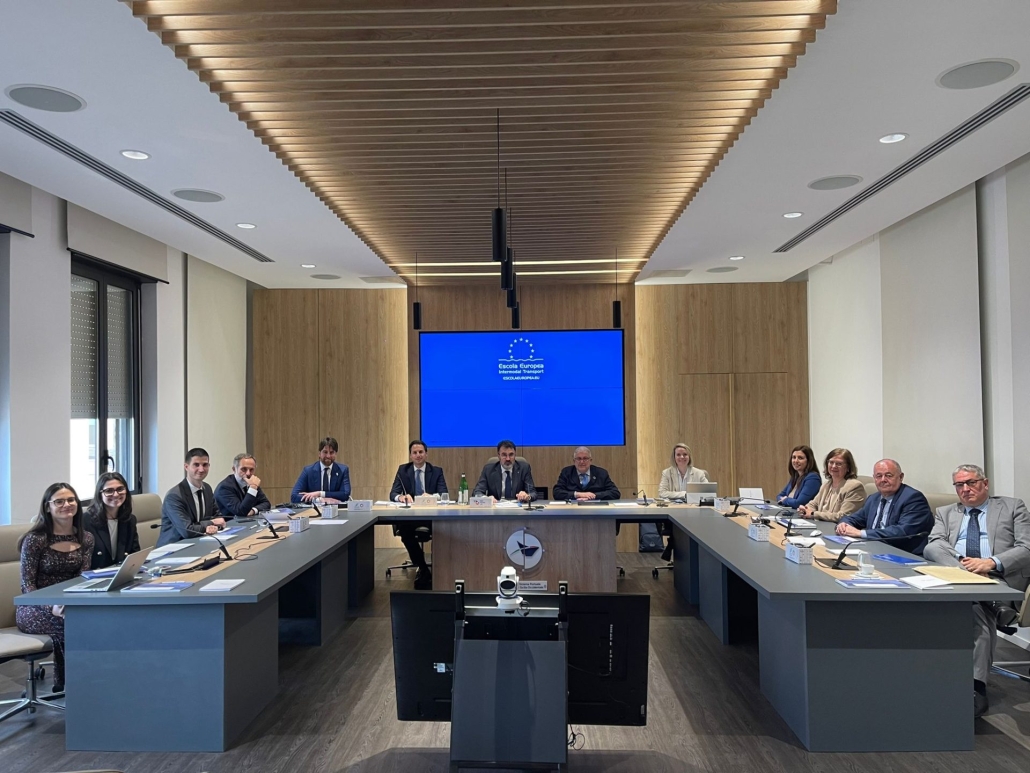
In a comprehensive management report, Eduard Rodés, the Director of the Escola Europea, celebrated the institution’s successes from the previous year and presented the forecasted initiatives for 2024.

“In 2023, the Escola Europea made significant strides by welcoming over 2,600 students of 82 different nationalities and hosting 7,200 participants across 199 activities. These numbers don’t just represent growth; they symbolise the widening impact of our work on the international scene. Our commitment to providing quality education in intermodal transport is not just shaping the future of the industry but also actively contributing to the development of the Mediterranean region as a strategic logistics hub,” stated Eduard Rodés.

The report highlighted the completed projects that have placed the Escola at the forefront of maritime and logistics training, as well as the introduction of new proposals that promise to enhance the institution’s future project portfolio. Among these were the growth of the Forma’t al Port programme and the Forma’t Talent course, as well as the initiation of the Rome, Genoa, and Sicily Port Academy programmes aimed at empowering young professionals with industry-specific knowledge and skills.

Particularly noteworthy was the development and success of the pilot initiatives of Port Virtual Lab (PVL), an innovative training solution which has evolved beyond its initial purpose as a pandemic response, becoming a fundamental simulation tool that is revolutionizing educational models within the logistics and port sectors.

The collaboration with MEDports was also a focal point of discussion, as the Escola Europea has been selected to manage the association’s monthly newsletter — MED Mosaic, and to lead the inaugural MEDports Challenge, which speaks to the institution’s rising prominence and the trust placed in its capabilities by industry partners.
Escola Europea and the Northern Central Tyrrhenian Sea Port Authority host the 9th Meeting of the Technical Committee of the Transport Community

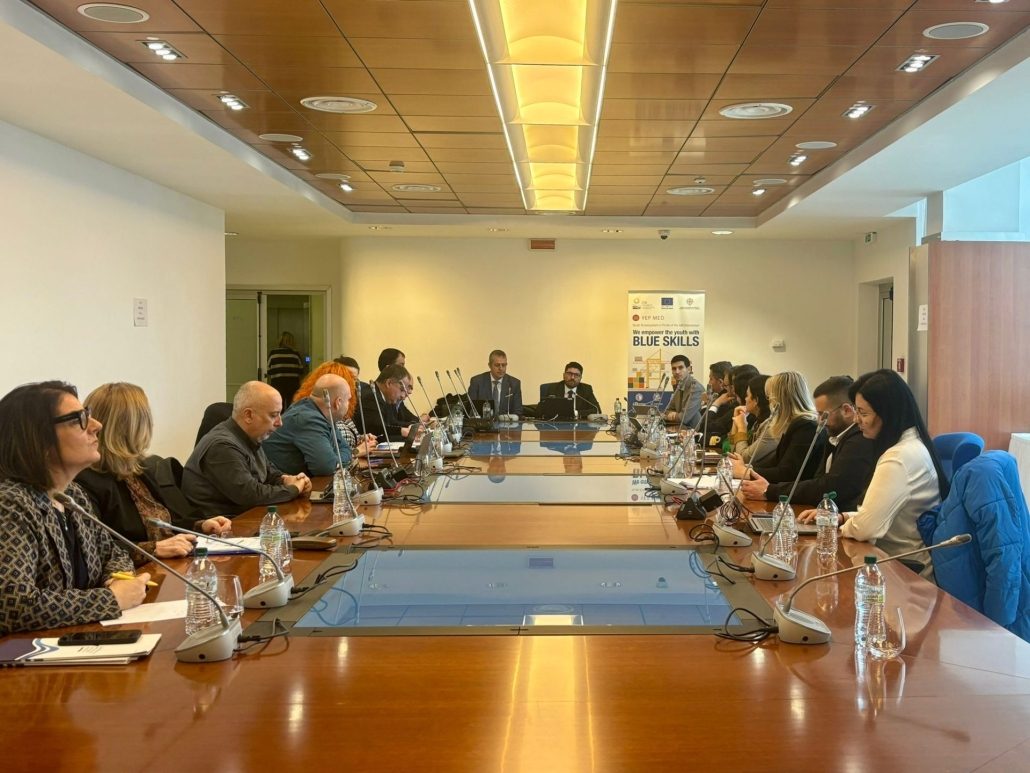
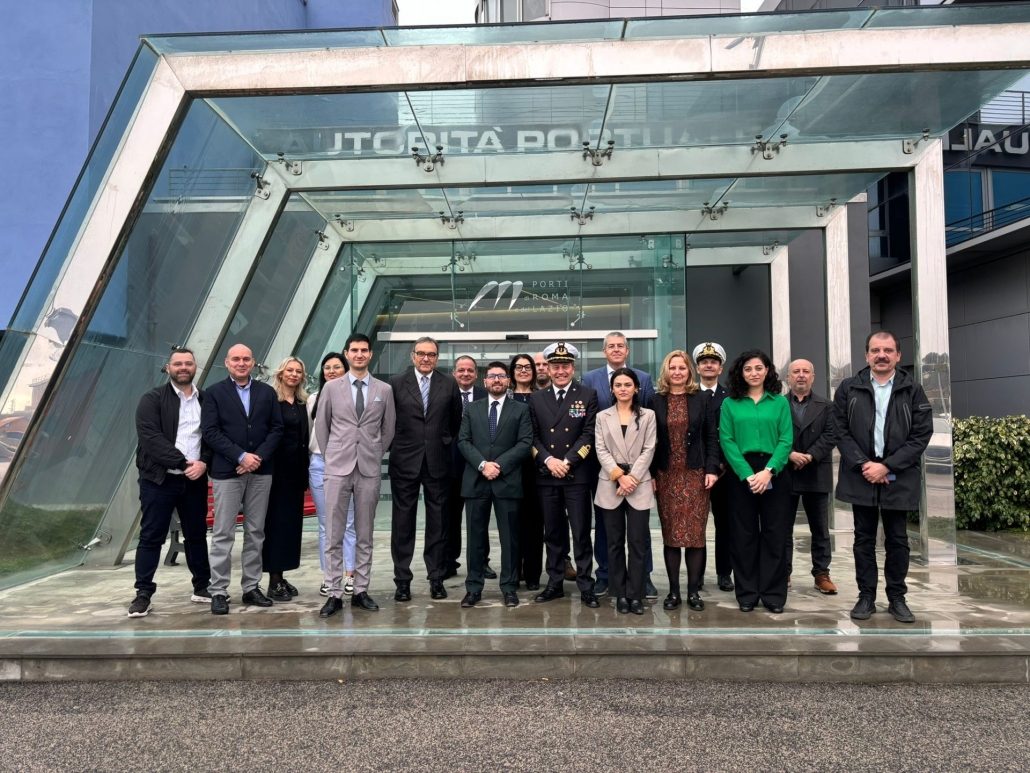
The 9th meeting of the technical committee of the Transport Community was held in the committee room of the Northern Central Tyrrhenian Sea Port Authority System (AdSP) and was organized by the Escola Europea in cooperation with the Autorità di Sistema Portuale del Mar Tirreno Centro Settentrionale – Porti di Roma e del Lazio and the Transport Community on on 29 February 2024. It welcomed representatives from the Western Balkans countries, Assoporti, and the MEDports Association.

Attendees of the 9th Technical Committee of the Transport Community in Italy

The meeting discussed the improvement of process efficiency and effectiveness in ports and gathered key stakeholders and experts from across Europe and beyond. Throughout the day, attendees explored initiatives like the Maritime Single Window and digitalization for trade streamlining. Additionally, sustainable port operations were emphasized, aligning with environmental stewardship goals. A standout moment was the presentation by Marco Muci , the Escola’s Country Manager for Italy, which provided insights into the Escola’s activities geared towards more efficient and immersive learning experiences.

To conclude our discussions, participants enjoyed a captivating study visit to the Port of Civitavecchia, gaining firsthand insights into its operations and facilities. Overall, the meeting was a success, marked by fruitful discussions and a shared dedication to advancing towards a more innovative and efficient tomorrow

“I am very proud to have hosted, at the headquarters of the entity – explained the President of AdSP Mtcs Pino Musolino – the 9th meeting of the Technical Committee of the Transport Community, an international organization dedicated to mobility and transport.”

“I wanted to emphasize – concludes the head of Molo Vespucci – how international relations and cooperation are of fundamental importance for the development of traffic, even in an area like the Balkan peninsula which is rapidly expanding, thanks to the integration of different transports, always with a careful eye on environmental protection and impact.

The Escola unites Northern, Central and Southern Italy within its classrooms through the incorporation of the Port of Palermo as the newest member

With the incorporation of the Port of Palermo as a member of the Escola Europea – Intermodal Transport, the training centre unites the north, centre and south of Italy with a common purpose of encouraging training in logistics, sustainable transport and maritime intermodality.

APRIL 20, 2023 (CIVITAVECCHIA) – The Governing Board of the Escola Europea held its annual meeting on the 20th of April of this month at the headquarters of the Port of Civitavecchia.

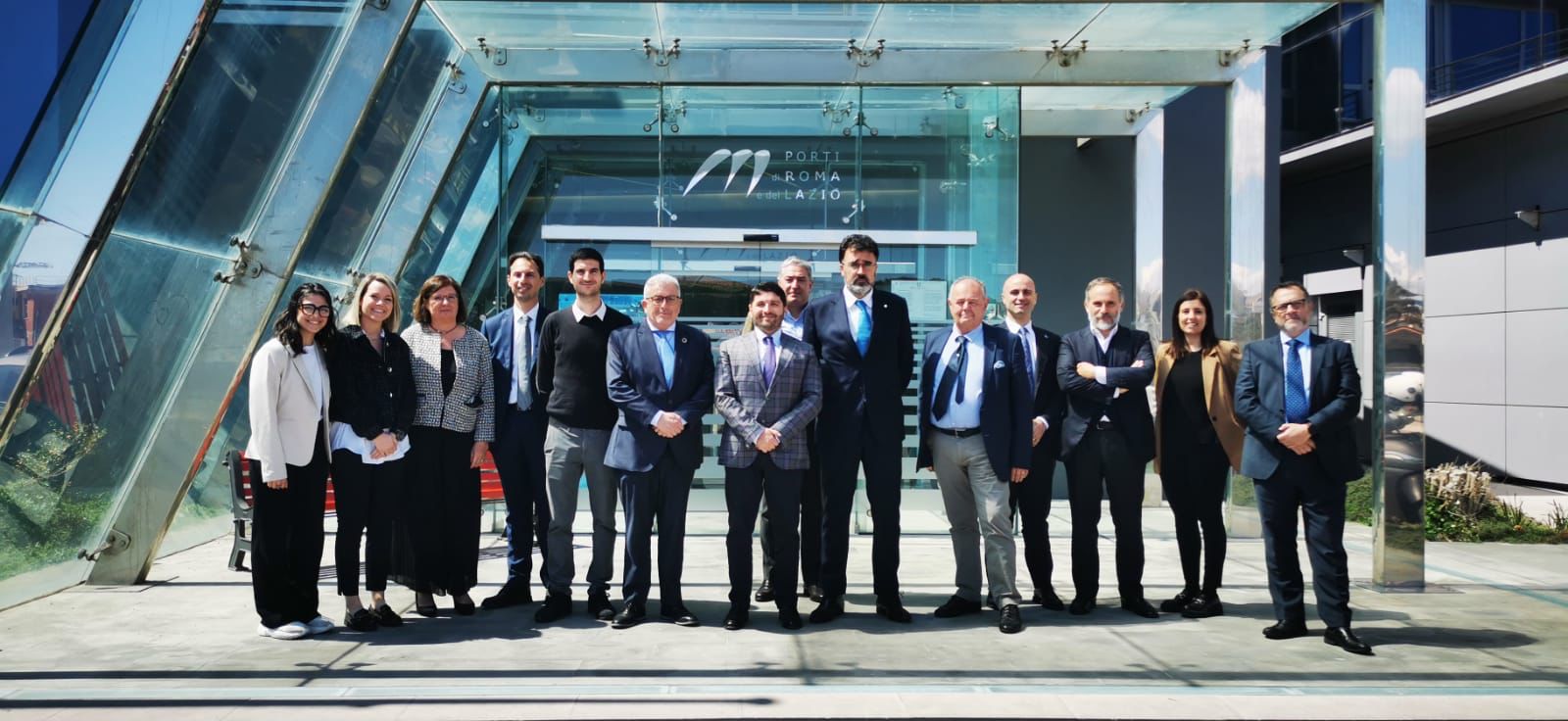
Members of the Executive Committee of the Escola Europea during the annual meeting held on the 20th of April 2023.

From left to right: Alessia Mastromattei, Marta Miquel, Catalina Grimalt, Luca Lupi, Marco Muci, Eduard Rodes, Pino Musolino, (in the back) Silvio Ferrando, Lluís Salvador, Antonio Pedevila, Antonino Ilardi, Mario Massarotti, Marta Coppola, Agustí Filomeno

For the first time in the history of the organisation, the Governing Board, under the chairmanship of Lluís Salvadó, voted and unanimously approved the entry of a new member, the Port of Palermo and, therefore, the Authority of the Maritime Port System of Western Sicily, into the Escola Europea-Intermodal Transport. With the addition of the Port of Palermo as a general member, it joins the ranks of the founding members the Port of Barcelona, the Port of Civitavecchia, the Port of Genoa and the shipping companies Grimaldi Lines and Grandi Navi Veloci (GNV).

The meeting was attended by: the President of the Port of Civitavecchia, Pino Musolino; the Director of the Escola Europea, Eduard Rodés; the CEO of GNV, Matteo Catani, as members of the Governing Board. As a part of the Executive Committee, the Deputy Director General for Organisation and Internal Resources of the Port of Barcelona, Catalina Grimalt; the General Manager of Grimaldi Lines Spain, Mario Massarotti; the Head of Marketing and International Business of the Port of Genoa, Silvio Ferrando; GNV Board Member, Antonio Pedevilla; Marta Coppola, member of the Presidency Cabinet of the Port of Civitavecchia, attended. The newly incorporated to the committee Secretary General of the Port of Palermo, Luca Lupi was also present, in addition to the head of the Presidency Cabinet of the Port of Barcelona, Agustí Filomeno; and Marta Miquel, Chief Business Officer of the Escola Europea.

The board members reviewed the activities carried out by the Escola in 2022, which totalled 160 actions with 5,542 participants. It was a record figure in the history of the institution in terms of courses and participants.

In parallel, the Escola has participated in several European projects, such as YEP MED for the promotion of quality employment among young people in the Mediterranean, and TECHLOG, which is developing Living Labs for training with simulation in the port environment.