Tag Archive for: MOST Iberia

Twenty Years on the Road Together

A reflection on two decades of collaboration between Portugal and the Escola Europea

Written by: Eduard Rodés, Director of the Escola Europea

There is a common misconception in logistics: that connectivity is built with infrastructure. Ports, railways, terminals, shipping routes – they matter enormously. But after more than twenty years working in transport and education, I have come to believe that the most important connections are built between people.

That is why it is impossible to tell the story of the Escola Europea without talking about Portugal.

For two decades, Portugal has been more than a neighbouring market or a strategic partner. It has been a genuine travelling companion – in the literal sense, too. Some of our earliest collaborations grew out of the Marco Polo programmes and initiatives such as MOST Portugal and SURCO Portugal, which aimed to promote short sea shipping and open new approaches to freight transport. Looking back, their most lasting achievement was less visible: they built a community.

A community of port managers, logistics professionals, public officials, and educators who discovered that working across borders produced better results than working alone. Many of those who joined those first programmes are now running companies, shaping policy, or training the next generation. The impact has kept travelling.

The People Behind the Projects

No partnership of this scale is built by institutions. It is built by individuals who decide to commit to something.

Antonio Belmar was one of those people during the formative years of our collaboration — someone who could bring the right stakeholders into the room and get things moving. Antonio Nabo Martins, first at CP and later at APAT, became another key figure in anchoring the relationship over time. And alongside them, many others: Eduardo Bandeira, Thiago Fernandes, Vítor Caldeirinha, Luís Cacho, Isabel Moura, João Carvalho, João Soares — professionals and lecturers whose contributions rarely make it into official records but have shaped everything we have built together.

Learning by Going

Some of my strongest memories from this collaboration come from the field: visiting Portuguese ports during Port2Rail, or riding the rail corridors of northern Spain with SURCO Portugal participants. These were demanding programmes, and deliberately so. You cannot really understand intermodality from a classroom. You have to see how a decision made at one terminal ripples through operations hundreds of kilometres away.

SURCO Portugal 2012 — participants at a Portuguese port visit

That conviction — that logistics has to be experienced, not just taught — remains at the centre of what we do.

What Has Held This Together

Twenty years is a long time in any sector — long enough to see funding programmes come and go, institutions restructure, and market conditions shift several times over. What has sustained the relationship with Portugal through all of that is not a formal agreement or a shared budget. It is trust. Trust allows organisations to share knowledge rather than guard it. It allows professionals to learn from each other without competition getting in the way. And it allows projects to survive the disruptions that any long-term collaboration will inevitably face.

Looking Ahead

Today, programmes like MOST Iberia and Port2Rail continue to bring together professionals from both sides of the border. The sector has changed — sustainability has moved from a nice idea to a strategic imperative, new technologies are reshaping operations, and AI is beginning to alter how logistics decisions are made. The questions are more complex than they were in 2005.

But the foundation is stronger, too. Twenty years of shared work means a network of people who know each other, trust each other, and have already proven they can collaborate effectively across borders.

That is the kind of infrastructure that does not appear on any map — but it may be the most important kind we have built.

The Escola Europea Wraps Up Another Successful Edition of MOST Iberia Course

The Escola Europea is delighted to announce the successful conclusion of the latest edition of the MOST Iberia course, bringing together professionals from the Spanish and Portuguese logistics-port sectors. Notably, this year’s course witnessed a significant shift in participant demographics, with an increasing number of professionals from Portuguese companies actively engaging in the programme, returning to the shape that the course had pre-pandemic.
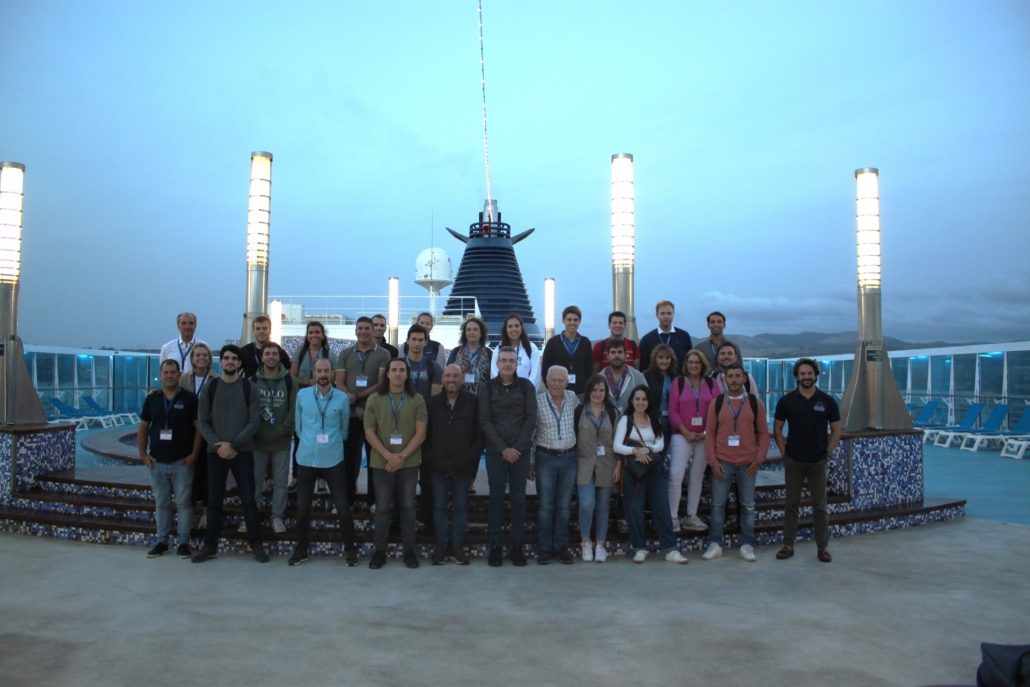
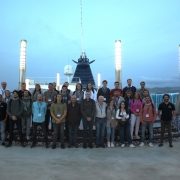
Over the course of four enriching days, professionals from diverse organizations, including ENIDH, Move Expert, Adm Porto Sines, Deloitte (with three participants), A3 Logistics, Port de Barcelona, Universidad A Coruña, Port of Tarragona, and Noatum (with two participants) from Spain and Portugal convened in Barcelona. This collective gathering allowed for an engaging exchange of knowledge, the sharing of experiences, and the forging of lasting professional relationships.

The course, which focused on intermodal logistics and motorways of the sea, provided an ideal platform for participants to enhance their competencies, while the unique environment of a crossing on Grimaldi Lines‘ Ro-Pax ferry between Barcelona and Civitavecchia allowed for a deeper understanding of each participant’s unique experiences.

Guided by a panel of expert professors, which included individuals such as Vitor Caldeirinha, the Director of SPC Intermodal Portugal, Javier Méndez, responsible for short sea shipping at the Port of Barcelona, and Antonio Vargas, an advisor of Grimaldi Logística España, the participants benefited from a well-rounded learning experience.

During the course, professionals from these diverse backgrounds came together in Barcelona to embark on a journey of knowledge sharing and collaboration. They explored various aspects of intermodal logistics and motorways of the sea, enhancing their professional skills and expanding their human networks.

The group also had the privilege of participating in a crossing on Grimaldi Lines’ Ro-Pax ferry, which connects Barcelona with Civitavecchia. This unique setting allowed participants to exchange knowledge, idiosyncrasies, and previous experiences from their respective countries.

One of the course highlights was the case study where participants tackled a real-life scenario related to short sea shipping viability. They applied direct and external cost calculations to evaluate economic, environmental, and social aspects of different alternatives.

For more information about the Escola Europea and its courses, please visit the official website at www.escolaeuropea.eu or contact us at [email protected].The Escola Europea is committed to facilitating learning, networking, and collaboration within the logistics and port sectors. The success of the MOST Iberia course demonstrates its dedication to fostering knowledge exchange and growth within the industry.
The Escola Europea celebrates another year of the MOST Iberia course for professionals

The Escola Europea has welcomed about twenty Spanish and Portuguese speaking professionals for the third edition of the MOST Iberia course.

On this occasion, the group comprising professionals from the Spanish and Portuguese logistics-port sectors met in Barcelona to embark on a 4-day course on intermodal logistics and motorways of the sea, and expand their professional and human networks. During a crossing of Grimaldi Lines’ Ro-Pax ferry that connects Barcelona with Civitavecchia, the professionals shared between themselves knowledge, idiosyncrasies and previous experiences from each one of their countries.

Companies and administrations such as Bytemaster, the Santander Port Authority, Casintra, OIA Global, CETEG, the BEST terminal and Grimaldi Lines itself have sent their representatives to take advantage of the training. As for the Portuguese delegation, members of public entities such as the Instituto da Mobilidade e dos Transportes, the Aveiro Port Authority and the Escola Náutica Infante Don Henrique participated.

The group was accompanied by a panel of expert professors that included Francisco Javier Valencia, the Maritime Captain of the Port of Barcelona, Antonio Vargas, an advisor of Grimaldi Logística España, Eduardo Bandeira, the director of Intermodal Portugal, Eduard Rodés, the director of the Escola and Vanessa Bexiga, Operations Manager of the Escola.

At the end of the course, the participants tackled a case study that presented a real-life scenario of short sea shipping viability, applying direct and external cost calculations to evaluate the alternatives from not only an economic point of view but taking account of environmental and social characteristics as well. “It has been a pleasant experience in which it was possible to know the points of view of the different actors in the logistics chain. The teachers are very well prepared, it is a pleasure to listen to things told with a passion for what they do”, commented a participant from Bytemaster.

MOST Iberia 2018 brings together Spanish, Portuguese and South American professionals

For a second year running, the Escola brought together professionals from Spanish and Portuguese transport enterprises during the MOST Iberia edition of its well-established courses in intermodal maritime transport.

Between the 20th and the 23rd of October, a group comprising 53 professionals from the logistics and port sectors of Spain, Portugal and South America descended onto Barcelona to improve their knowledge of intermodal logistics and the motorways of the sea, and to expand their professional networks. During 4 days on board of a Ro-Pax ferry of Grimaldi Lines linking Barcelona to Civitavecchia, the participants could share their experiences, idiosyncrasies, and knowledge coming from their respective countries.

From Spain the participants came from the Spanish Ports (Puertos del Estado), as well as including logistic operators, transport companies and large associations and corporations from the sector: Roehlig, Casintra, Acotral, JVC Shipping & Solutions, El Corte Inglés and ATEIA. The South American delegation consisted of 25 professionals coming from port communities from Argentina, Bolivia, Brazil, Chile, Colombia, Costa Rica, Ecuador, El Salvador, Guatemala, Honduras, Mexico, Nicaragua, Panama, Peru, the Dominican Republic and Uruguay. Members of public entities such as the regional government of Madeira, the Institute of Mobility and Transport, port authorities of Sines, Algrave, Douro, Leixões and Viana do Castelo, alongside representatives of private companies (Navex and Intermodal Portugal) formed the Portuguese delegation. “Excellent lecturers, an experience that allowed us see transport logistics from different perspectives than the ones we’re used to. All of this while living and experiencing a Mediterranean maritime journey. Thank you for everything” expressed one participant.

The teaching staff comprised: Álvaro Rodríguez Dapena, Planning and Development Director of Spanish Ports (Puertos del Estado); Ana Arévalo, Commercial Manager of SSS at the Port of Barcelona; Antonio Vargas, Ex General Director and current Board Member of Grimaldi Logistics Spain; Eduardo Bandeira, Executive Director of Intermodal Portugal; Raquel Nunes, Promotion and Training Manager and Eduard Rodés, Director of the Escola Europea.

The course developed the concept of co-modality as a tool to improve transport management. The motorways of the sea were shows as fundamental elements of a sustainable logistics supply chain. The course participants have to resolve a case study that evaluates short sea shipping solutions, and applies calculations of direct and indirect costs to determine an optimal transport solution in terms of economic, social and environmental terms.

Escola Europea to organise Motorways of the Sea Training courses for European professionals in autumn 2018

This autumn the Escola’s MOST courses for professionals will return, with two editions scheduled for professionals coming from Italy and the Iberian Peninsula, respectively.

The aim of the MOST Management courses is to offer complete and concise training in intermodal maritime logistics, short sea shipping services and the motorways of the sea. The courses aimed at professionals combine lectures, workshops, terminal visits, navigation and networking. The course participants begin the theoretical training in intermodal transport and logistics at the headquarters of the Escola in Barcelona, and then board a Ro-Pax vessel of Grimaldi Lines en-route to Civitavecchia to continue the training along the short sea shipping route.

The Port of Barcelona, the Ports of Rome and Grimaldi Lines, three of Escola’s five founding partners, collaborate in the organisation of the upcoming courses in September and October. While MOST Italy will also be sponsored by Alis, RAM Spa, Assoporti, Confitarma and AssArmatori , MOST Iberia is co-sponsored by the Spanish State Ports (Puertos del Estado), the European Shortsea Network, the Spanish Shortsea Promotion Centre and the Portuguese Shortsea Promotion Centre–Intermodal Portugal. The teaching staff will comprise professionals from the European transport sector as well as academic experts.

The MOST Italy course will take place between the 29th of September and the 2nd of October. Its contents will focus more on intermodal transport in Italy itself, tailoring the contents for the course participants. MOST Iberia, similarly, will take place 20-23th of October and will emphasize intermodal transport aspects of the Spanish and Portuguese markets.

For more information on the Escola’s open courses head to the calendar section of our website.