Tag Archive for: Port2Rail

Twenty Years on the Road Together

A reflection on two decades of collaboration between Portugal and the Escola Europea

Written by: Eduard Rodés, Director of the Escola Europea

There is a common misconception in logistics: that connectivity is built with infrastructure. Ports, railways, terminals, shipping routes – they matter enormously. But after more than twenty years working in transport and education, I have come to believe that the most important connections are built between people.

That is why it is impossible to tell the story of the Escola Europea without talking about Portugal.

For two decades, Portugal has been more than a neighbouring market or a strategic partner. It has been a genuine travelling companion – in the literal sense, too. Some of our earliest collaborations grew out of the Marco Polo programmes and initiatives such as MOST Portugal and SURCO Portugal, which aimed to promote short sea shipping and open new approaches to freight transport. Looking back, their most lasting achievement was less visible: they built a community.

A community of port managers, logistics professionals, public officials, and educators who discovered that working across borders produced better results than working alone. Many of those who joined those first programmes are now running companies, shaping policy, or training the next generation. The impact has kept travelling.

The People Behind the Projects

No partnership of this scale is built by institutions. It is built by individuals who decide to commit to something.

Antonio Belmar was one of those people during the formative years of our collaboration — someone who could bring the right stakeholders into the room and get things moving. Antonio Nabo Martins, first at CP and later at APAT, became another key figure in anchoring the relationship over time. And alongside them, many others: Eduardo Bandeira, Thiago Fernandes, Vítor Caldeirinha, Luís Cacho, Isabel Moura, João Carvalho, João Soares — professionals and lecturers whose contributions rarely make it into official records but have shaped everything we have built together.

Learning by Going

Some of my strongest memories from this collaboration come from the field: visiting Portuguese ports during Port2Rail, or riding the rail corridors of northern Spain with SURCO Portugal participants. These were demanding programmes, and deliberately so. You cannot really understand intermodality from a classroom. You have to see how a decision made at one terminal ripples through operations hundreds of kilometres away.

SURCO Portugal 2012 — participants at a Portuguese port visit

That conviction — that logistics has to be experienced, not just taught — remains at the centre of what we do.

What Has Held This Together

Twenty years is a long time in any sector — long enough to see funding programmes come and go, institutions restructure, and market conditions shift several times over. What has sustained the relationship with Portugal through all of that is not a formal agreement or a shared budget. It is trust. Trust allows organisations to share knowledge rather than guard it. It allows professionals to learn from each other without competition getting in the way. And it allows projects to survive the disruptions that any long-term collaboration will inevitably face.

Looking Ahead

Today, programmes like MOST Iberia and Port2Rail continue to bring together professionals from both sides of the border. The sector has changed — sustainability has moved from a nice idea to a strategic imperative, new technologies are reshaping operations, and AI is beginning to alter how logistics decisions are made. The questions are more complex than they were in 2005.

But the foundation is stronger, too. Twenty years of shared work means a network of people who know each other, trust each other, and have already proven they can collaborate effectively across borders.

That is the kind of infrastructure that does not appear on any map — but it may be the most important kind we have built.

Rail on Track: Port2Rail Returns to Portugal and SURCO Navarra Brings Intermodality to the Region

We’ve been busy on the rails. This spring, two new programmes have taken our approach to hands-on training directly into the field — connecting learning with real infrastructure, real operations, and real logistics networks.

The Port2Rail 2026 cohort. Three days, six logistics nodes, and a train full of people who understand that the best way to learn intermodality is to live it.

Port2Rail is back — fourteen years on

Port2Rail, our practical course on maritime-rail intermodality, returned to Portugal with a new edition that took participants through Lisbon, Setúbal, Sines, Aveiro, Leixões and Entroncamento. Fourteen years after its first edition, the concept remains the same: the train journey itself becomes the classroom.


From the vault: participants of the very first Port2Rail edition, 2011. Fourteen years later, the train is still running

Over three days, transport, logistics and international trade professionals combined technical sessions, operational visits and hands-on exercises with the Port Virtual Lab, exploring Portugal’s key logistics nodes and analysing the integration of ports, rail terminals and intermodal corridors in real time.

The programme was developed together with APAT – Associação dos Transitários de Portugal, with the participation of the Polytechnic Institute of Setúbal, Infraestruturas de Portugal, CP – Comboios de Portugal, MEDWAY, and the port authorities of Lisbon, Setúbal, Sines, Aveiro and Leixões.

As our director Eduard Rodés put it: “Running this course on rails again, fourteen years after its first edition, meant recovering a way of learning that is directly connected to the operational reality of rail and intermodal transport. These initiatives are only possible thanks to the collaboration between public institutions, rail operators, port authorities, companies and training organisations who believe in education built from real experience.”

SURCO Navarra: rail in regional context

Alongside Port2Rail, we recently delivered the SURCO Navarra programme, developed in collaboration with the Government of Navarra — which funded it entirely — and with the support of CEN and AER. The programme brought together shippers, carriers, logistics operators and vocational training teachers in Pamplona and Tudela to explore the role of rail within regional and international logistics chains.

Participants visited the Traffic Control Centre in Zaragoza, the Zaragoza Maritime Terminal and the intermodal terminal in Noáin — translating real infrastructure into shared learning.

Both programmes reflect what we do best: training that doesn’t happen in a classroom alone, but inside the logistics networks we’re all working to improve.

Rethinking Freight: Why Rail is the Missing Link in Your Logistics Strategy

In the pursuit of greener, more efficient supply chains, discussions often center on electrifying fleets, reimagining packaging, or automating warehouses. Yet, a powerful and often underutilized lever exists: rail freight logistics.

Despite its efficiency and environmental benefits, rail freight remains underrepresented in many European supply chains. According to Eurostat, rail accounts for only about 18% of inland freight transport in the EU, with road transport dominating over 75% .

This underutilization isn’t solely due to infrastructure limitations; it also reflects a knowledge gap.


The Value of Understanding Rail

Road transport is often the default choice—it’s flexible, familiar, and fast. However, as we face stricter emissions targets, congestion challenges, and rising fuel costs, integrating rail into logistics strategies becomes increasingly vital.

To effectively incorporate rail, logistics professionals need to understand:

  • Port-rail terminal operations, including those for containers, vehicles, and bulk goods.

  • The technical characteristics of freight rail networks, such as track gauge compatibility, loading units, and service frequencies.

  • Contracting and billing models unique to rail, which differ significantly from road freight.

  • Case studies showcasing successful intermodal chains combining rail with maritime or road transport.

  • The role of traffic regulation and centralized control, exemplified by ADIF’s Centro de Regulación y Control .

  • Digital tools like PORTICrail, facilitating port-to-rail coordination and data exchange among stakeholders .

Embracing rail isn’t about replacing road transport but about knowing when and how rail can complement existing logistics to enhance service, reduce emissions, and optimize costs.


Ports Are Leading the Way

Spain’s major ports—Barcelona, Valencia, and Algeciras—have heavily invested in intermodal infrastructure, positioning rail as a strategic tool for competitiveness. Initiatives like the Mediterranean and Atlantic rail corridors support this shift, connecting inland terminals with maritime gateways across borders.

However, to fully leverage these developments, the logistics workforce—from operations managers to future logisticians—must be equipped with practical knowledge of rail operations.


Bridging the Knowledge Gap

Practical, hands-on learning is crucial to bridge the knowledge gap in rail logistics. Educational initiatives that combine classroom sessions with site visits to terminals and control centers are increasingly relevant.

For instance, the upcoming SURCO Port to Rail Operations course in Barcelona offers participants insights into the technical aspects of rail freight, complemented by visits to facilities like Autoterminal, Can Tunis, and ADIF’s control center. Such programs enable learners to not only grasp theoretical concepts but also witness their real-world applications.

Whether you’re a freight forwarder reevaluating service offerings, a student exploring intermodality, or a company aiming to develop sustainable logistics solutions, rail may be the strategic tool you’re overlooking.


We’ve done our research – you should too! Check out our sources and further reading:

  • European Commission. Transport in the European Union: Current Trends and Issues. Link

  • Eurostat. Freight Transport Statistics – Modal Split. Link

  • Port de Barcelona. Memoria Anual 2023. Link

  • ADIF. Centro de Regulación y Control (CRC). Link

  • PORTIC. PORTICrail Platform. Link

Rail as key strategic freight transport

Railway is key part of the Spanish and European commitment to decarbonise the freight transport sector. Initiatives such as ‘ecoincentivos’, digitalisation, and automation, or “usage per load volume” are some of the challenges and characteristics that have been identified to help include rail as strategic freight transport.

Spain has the most kilometres of high-speed rail (3,402) in the European Union, and is the second country in the world (only surpassed by China). Nevertheless, despite these impressive numbers, beyond the road infrastructure equipment there are still several services linked to this transport that need to be developed, including the developments of digitalisation and the lack of equipment for its use. 

Within the area of freight transport (discounting passenger traffic), the commitment to multimodal supply chains could be the key to achieving the ambitious objectives of the European Union toward environmental goals; especially by making use of an existing and easily applicable means of transport such as rail. 
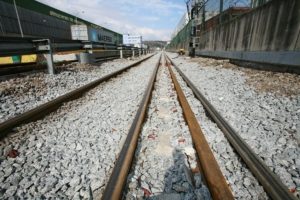
 

SURCO Operations II, que será en Madrid del 23 al 31 de enero 2023.

SURCO Operations II, que será en Madrid del 23 al 31 de enero 2023.


According to the Community of European Railway and Infrastructure Companies (CER), transport accounts for 31% of energy consumption of land transport in the European Union. Rail, for its part, is seven times more efficient than road transport. In terms of emissions, rail accounts for 0.4% of all transport. If only freight transport were to be taken into account, the railway would play a fundamental role to reach a sustainable system and meet the global objectives set, since the train emits 80% less CO2 than its equivalent by road, according to sources from El Economista. In addition to reducing emissions, it reduces external costs by up to 50%: a train replaces 40 lorries and thus helps decongest roads, reduce accidents and lowers noise. It also consumes six times less energy and is eight times better in terms of air pollution.


Within freight transport, commitment to using multimodal supply chains could be the key to achieving global objectives, especially by making use of an existing and easily applicable means of transport such as rail.

According to Xavier Flores, the General Secretary of Infrastructures of the Spanish Government, one of the challenges towards achieving the expansion of this system is the fact that only between 4% and 5% of the total freight is moved by rail in Spain. 


The most efficient freight transport 

The following factors can be attributed to the efficiency of rail transport:  

  1. Low resistance: thanks to the wheel tread, the elastic deformation of the wheel-rail contact is comparatively low, as both elements are made of steel.  
  1. Optimal aerodynamic drag: In long trains, the friction depends mainly on the cross-section of the vehicle, not the length. This results in minimal energy consumption. 
  1. High-capacity transport: especially when the train reaches European standards of 740 m in length, and by boosting the electrification of railway lines, rail transport becomes a much more sustainable and competitive mode of transport than road for medium and long distances.  

Key for decarbonizing the transport sector 

There are several agreements that have created a roadmap for transport to reduce emissions: the 2030 Agenda, the Paris Agreement and the Green Deal in Europe are just some of them.  

In 2011, the European Commission’s White Paper set a target of shifting 30% of road freight transport over 300 km to rail or inland waterways by 2030. Since then, European governments, institutions and companies have been working to reach agreements to tackle climate change. Combined or multimodal transport has been presented as the most economically and environmentally sustainable option solution for achieving this goal.  

‘Ecoincentivos’: a commitment to the environment 

To get on board the decarbonisation train and encourage the use of rail for freight transport, the Spanish Ministry of Transport, Mobility and Urban Agenda (Mitma) promoted the ‘eco-incentives’ programme. This was designed to last for the upcoming three years within the framework of the Recovery, Transformation and Resilience Plan. 

This initiative has encountered some setbacks, as it is only applicable for those companies that have or will see a minimum growth of 8% in the volume of cargo transported. During the first half of the year this figure was being reached by almost all rail companies in the sector. Nevertheless, starting from June 2022, there was a radical turn downwards experienced by the dependence on such sectors as: chemical, aluminium, metallurgical or automotive, industries which in turn have also seen a fall in their activities, according to sources from the newspaper Transporte XXI. 

Because of this, the Ministry of Transport is considering reformulating its aid plan in view of the decrease in activity suffered by railway companies in the second half of the year. However, the unused part of the total allocated budget for the current year (20 million) will not be lost, but will be rolled over to 2023. 

Furthermore, in accordance with the proposals set out in the “Safe, Sustainable and Connected Mobility Strategy” 2030 of the Mitma (Ministry of Transport, Mobility and Urban Agenda of Spain), called “Intermodal and Smart Logistics Chains”, the Mercancías 30 initiative was announced and will be launched, aiming to promote rail freight transport as the backbone of multimodal logistics chains. From the dual perspective of the post-COVID19 economic recovery and the achievement of the objectives of decarbonisation and sustainability of transport. This programme will allocate around 8.8 billion euros for the development of rail freight, both for infrastructure (6.8 billion euros) and equipment (2 billion euros). All actions are to be carried out before 2030.  

The long road towards digitisation  

The road to rail digitisation is a long one, with outdated systems and obsolete technology being among the main challenges to optimisation. According to McKinsey’s report titled ‘Digitizing Europe’s railways: A call to action‘ (2020), despite its robustness, Europe’s railways have outdated systems that are increasingly difficult to maintain. Some major European railways have several types of interlockings, some of which are more than a century old and use very obsolete technology. 

According to a PierNext article – an initiative of the Port Authority of Barcelona – to become the transport mode of the decarbonised Europe, railway must meet five digital axes: 

  1. Digitalising and interconnecting infrastructures 

  1. Automation as the basis for its operations and infrastructures 

  1. Processing and exploiting data 

  1. Run everything in the Cloud 

  1. Safety and security as top priorities  

The European rail sector can continue to promote technology systems. Digitalisation is key to this, especially when looking to become the central freight transport system in Europe and Spain.  The challenge is significant, as the window of opportunity is narrow, and regardless of their interests or wills, the whole industry must be willing to collaborate to drive change. 

The potential gains in cost and capacity efficiency, as well as the benefits of reduced CO2 emissions, are considerable, both within and outside Spain and Europe. To achieve this, operators, governments and companies must cooperate and act to promote the use of rail and co-modality as the most economically and environmentally sustainable response to today’s global challenges. 


Look out for our upcoming courses: SURCO Madrid 2023 – Escola Europea – Intermodal Transport
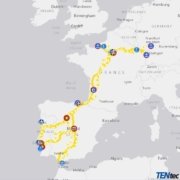
#DidYouKnow – Rail transport and the development of the Iberian Peninsula as a Hub – Atlantic Corridor

Should Spain and Portugal jointly boost investment in infrastructure of rail transport? This is a question that is currently on the minds of the operators and actors active in the rail transport sector on the Iberian peninsula. To coincide with the European Union’s goals on sustainable development, the sector still has a long way to go to garner a portion of the market share currently occupied by maritime and road transport.

“The Portuguese and Spanish governments should increase their budgets for rail and port infrastructure” is the European Commission’s recommendation. Portuguese ports are considered as potential European import hubs because of their geographical location on the Atlantic coast. In this context, investment in port and rail infrastructure should be encouraged. The European rail system transports around 1.6 billion tonnes of goods each year. Rail transport is fundamental to the European Union’s strategy for a more sustainable transport sector, for economic and social cohesion and for connecting European countries within and between Member States.

Some of the main European modal corridors link Portugal and Spain, thus contributing to the improvement of connections between the centre of the EU and its peripheral regions, whilst strengthening the position of the Iberian Peninsula as a portal to Western Europe.

There are two main European corridors entering the Iberian Peninsula: the Atlantic Corridor and the Mediterranean Corridor. Looking at the Spanish rail network, we have the Atlantic corridor, which connects the French border of Irun/Hendaye with Portugal via Vitoria, Burgos and Valladolid, with a branch that goes south via Madrid, Lisbon and the port of Algeciras. The Mediterranean Corridor runs from the French border at Portbou/Cerbère to the port of Algeciras and Seville along the Mediterranean coast, through Barcelona and Valencia. In  Portugal, the Atlantic Corridor begins in Lisbon and the port of Sines, then moves eastwards through Spain (through Badajoz-Elvas). Another branch goes to Aveiro and Porto, and then moves eastwards to Spain through Vilar Formoso-Salamanca.

“The mission of the Atlantic Corridor principally covers the management of existing infrastructures, without additional investments, through centralized management of capacity allocation, traffic management and costumer relationship.” This project arose with the common objective of the governments of Portugal, Spain, France and Germany to increase the competitiveness and modal share of international rail freight transport and to jointly overcome technical and operational barriers. The Atlantic Corridor is integrated into the Trans-European Transport Network (TEN-T) and is connected to the Mediterranean Corridor and the North Sea-Mediterranean Corridor. The extension of the Atlantic Corridor to Germany will allow direct connections with two other corridors, namely the Rhine-Alps and the future Rhine-Danube.

With a total length of more than 6,200 km, the main heterogeneous technical characteristics in terms of infrastructure that need to be improved stand out: the presence of the European gauge (1435 mm) in France and Germany and the larger Iberian gauge (1668 mm) in Portugal and Spain; electrified sections with differing voltages; and different signaling systems. The aim of the Atlantic Corridor is to coordinate investment in order to homogenize the technical characteristics of the infrastructures throughout the participating countries in this project.

EU railways continue to grow. Rail markets are gradually opening up and safety levels remain high. This sector is increasingly demanding more innovation and responsiveness to customer needs. Rail transport’s fight to increase its modal share continues to center around interoperability and cross-border coordination issues. Corridors are essential elements of the Commission’s policy to boost rail freight transport. If the sector can convince haulers to opt for rail motorways to reduce costs, and exporters and importers to transport their freight to ports by rail, it is very likely to grow in the coming years and thus continue to align itself with the EU’s mission towards the sustainable development of transport on the continent.

Intrigued? The Escola will delve into these and other railway related subjects in great depth during the upcoming Port2Rail course, set to take place in October 2019. Check out the course programme here.

Written by:

  • Raquel Nunes, Training Programmes & External Relations Manager (Escola Europea – Intermodal Transport)