SHIP: A New Educational Model for Designing Sustainable Maritime Routes

In today’s landscape where sustainability, energy efficiency, and intermodality are reshaping sustainable maritime transport, the education of future professionals is also undergoing a transformation. In response to this shift, SHIP – Short-sea High-efficiency Intermodal Planning, a new training programme designed by the Escola Europea – Intermodal Transport, has been launched in collaboration with the Technological University of Panama (UTP). The course was tailored for naval and mechanical engineering students and marks a significant step forward in applied maritime education.

A Strategic Planning Challenge on Board

Built to bridge academic knowledge and industry reality, the SHIP course immerses students in the full design process of a sustainable short sea shipping (SSS) service — from concept to implementation — integrating technical, economic, and environmental dimensions.

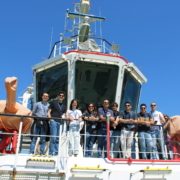
During a hands-on experience aboard a Grimaldi Lines Ro-Pax vessel sailing between Barcelona and Civitavecchia (Rome), participants worked through a practical exercise: the design of a hypothetical shipping line between Barcelona and Radès (Tunisia).

This challenge required students to assess market demand, select appropriate vessels, calculate transit times and operational costs (including crew, maintenance, and fuel), and estimate CO₂ emissions. All decisions were based on real-world data and aligned with current regulatory constraints, such as SECA zones, as well as future challenges, including alternative propulsion systems and ship design innovations.

Learning from the Inside Out

Consistent with the Escola’s experiential learning approach, SHIP blended technical lectures with dynamic, real-life applications. Students attended sessions on logistics planning, cost analysis, emission reduction strategies, and technological innovation. These were complemented by onboard visits to operational areas such as the bridge, engine room, and garage, along with collaborative workshops and group project development.

The programme also featured port operation observations and opportunities for technical debate and project presentations. This holistic method fostered a multidisciplinary understanding of the maritime logistics system, combining engineering, management, and sustainability competencies.

“In SHIP, we take engineers off their formula-driven highways and place them in the real world—where they first absorb reality, and then let the math do its magic,” explained Alexandre Ariza, Academic Manager at Escola Europea.

A Custom Programme with a Future Vision

Though initially designed to address a specific request from the UTP, SHIP is not a one-off initiative. Its success and relevance position it as a future staple in the Escola’s course portfolio. More than just technical content, the course promotes critical, interdisciplinary thinking—crucial for navigating a sector in constant evolution.

The SHIP programme proves that it is possible to train engineers not only to optimise routes by cost and time, but also to think ahead in terms of decarbonisation and energy transition. Because today, more than ever, planning sustainable logistics services starts well before the vessel sets sail—it starts in the classroom, in design tools, and in the strategic vision of the next generation of maritime leaders.

Escola Europea at SIL 2025: A Milestone Week for Innovation and Collaboration

Yesterday marked an exciting start to SIL Barcelona 2025 for the Escola Europea – Intermodal Transport and the PLIKA community. Our first day at the fair featured a packed session at MedaLogistics titled “The Future of Mediterranean Supply Chain: Digital & Green Transformation”, where our colleague Orlando Reveco explored how digital tools are shaping a more efficient, sustainable supply chain across the region. The event brought together industry leaders, fostering rich discussion and fresh ideas around collaboration and innovation in the Mediterranean corridor.

Today promises even more action and recognition. Starting at 10:30, our Academic Director Marta Miquel will moderate the session “Seizing Africa’s Logistics Infrastructure Potential,” joined by Eduard Rodés, who will share how education and digitalisation can drive logistics transformation across the African continent. Later in the morning, visitors can join two hands-on workshops at the Port of Barcelona stand: the first explores the role of artificial intelligence in logistics and transport, with Orlando Reveco; the second, led by Marta Miquel, introduces the Port Virtual Lab and how simulation and gamification are enhancing maritime and intermodal logistics training. And at 13:25, tune in to La Ciutat on Onda Cero, where Eduard Rodés will speak live from the central corridor of SIL.

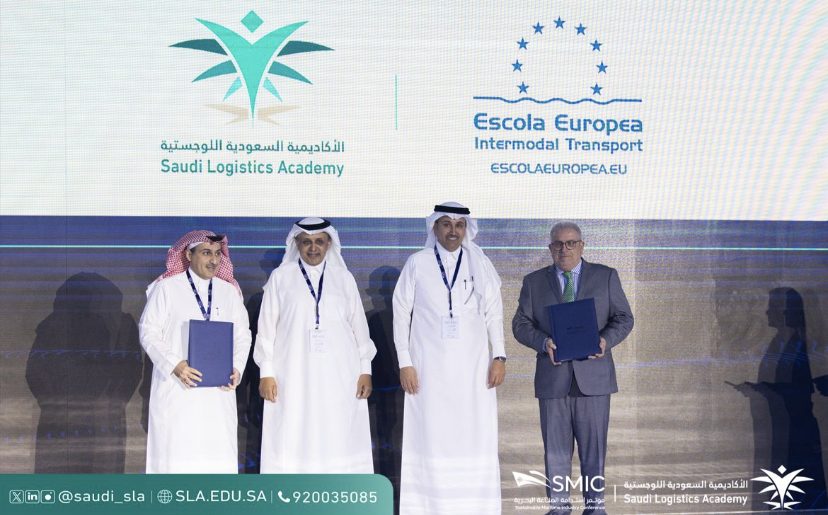
We’re also thrilled to announce that Escola Europea will be receiving an Innovation Award today—an important recognition of our ongoing commitment to transforming logistics education through digital tools like PVL and our international training programmes.

If you’re at SIL, be sure to visit our stand to discover our latest initiatives and pick up a special surprise if you’re part of our alumni network. Let’s continue building the future of sustainable, interconnected logistics—together.

Port Professionals Unite for Innovation and Immersive Learning at the PLIKA II Annual Event

The Port Logistics International Knowledge Academy (PLIKA) marked a major milestone with its II Annual Event, titled “Growing Together: A PLIKA Simulation Experience,” held on the 18th of June 2025 in Barcelona and online. Hosted by Escola Europea – Intermodal Transport, the event gathered professionals, educators, and innovators from the Mediterranean’s port logistics ecosystem and beyond to celebrate progress, share insights, and experience the future of immersive learning through the Port Virtual Lab (PVL) Flash simulation.

Founded with the mission to connect port professionals, promote international collaboration, and foster continuous education through digital tools, PLIKA has become a thriving community of practice, counting 66+ members across institutions and regions, including recent additions like SAMK University of Applied Sciences (Finland) and the Port Network Authority of the Northern Tyrrhenian Sea (Italy).

Simulation as a Bridge Between Learning and Real-World Complexity

At the heart of the day’s activities was the Port Virtual Lab Flash challenge-an interactive, gamified simulation designed to mirror real-world logistics decision-making. In this edition, participants were grouped into teams and challenged to compare multimodal transport solutions for delivering a CNC milling machine from Cairo, Egypt to Bari, Italy, taking into account cost, CO₂ emissions, and delivery time.

Using PVL’s immersive interface, participants evaluated sea, air, and combined transport routes by working with realistic data from simulated freight companies such as Playforwarding Barcelona, inspired by real-world freight forwarders. The scenario tested not only technical logistics knowledge but also decision-making under pressure, critical thinking, and teamwork.

The simulation concluded with a competitive debrief, analysis of the top-performing teams, and the announcement of the winning group by Mr. Abdessalam Obeidat (Aqaba Development Corporation), followed by final reflections from Mr. Rabih Sabra (Chamber of Commerce, Beirut) and Ms. Taheya Elsherbeny (Port Training Institute, AASTMT).

The event opened with a warm welcome from Mr. Eduard Rodés, President of PLIKA and Director of Escola Europea, who emphasized the academy’s commitment to innovation and inclusive education. Prof. Alaa Morsy, Vice President of PLIKA, highlighted how the community is growing stronger through regional engagement and partnerships with maritime and academic institutions.

Ms. Ana Rumbeu, Director of Training at Fundación Valenciaport and PLIKA Vice President, delivered a forward-looking presentation on the evolution of training frameworks in logistics and the skills required in the face of automation, digitalisation, and global shifts.

“Every new relationship we build here brings us closer to transforming the port logistics industry and leading change. Together, we can achieve great things” – Ana Rumbeu, Fundación Valenciaport

Meanwhile, Ms. Valeria Munar, PLIKA Community Builder at Escola Europea, showcased the growing momentum of PLIKA initiatives-from newsletters and monthly “Words of the Month” to the highly successful PLIKERS Innovation Hackathon and webinars on AI and Mediterranean cooperation.

What’s Next for PLIKA?

“Today’s event was a true celebration of the spirit of collaboration, learning, and community that defines PLIKA. It reflected the richness of diverse perspectives and shared values across the borders of the Euro-Mediterranean region.”

– Rabih Sabra, Director General – Chamber of Commerce, Industry and Agriculture of Beirut & Mount Lebanon

Looking ahead, PLIKA aims to expand its reach through more collaborative simulations, new learning modules powered by PVL-including rail and air freight-and a stronger presence in the Mediterranean and global South. Plans are already underway for the 2026 edition of the Annual Event, with a continued focus on bridging education, simulation, and sustainable logistics .By democratizing access to experiential learning, PLIKA continues to empower a new generation of logistics professionals-ready to lead with competence, confidence, and collaboration.

Your Comfort Zone isn’t Intermodal – it needs Digital Skills

Eduard Rodés, Director - Escola Europea - Intermodal Transporrt

Written by: Eduard Rodés,
Director – Escola Europea – Intermodal Transport

We are facing a period of major global change. Global logistics operators are merging, extending their capacity across air, land and sea. Large shipping companies are diversifying their services and transforming into integrated mobility providers.

All of this is having a direct impact on supply chains, which are becoming more and more intermodal and in need of more digital skills. And this doesn’t just affect infrastructure, platforms or processes—it affects people. The professionals who have to make decisions in these new environments.

That’s where the real shift needs to happen. And no, I’m not talking about becoming a computer scientist overnight. I’m talking about being prepared to work in a system that is already digital, already intermodal, and moving fast.

That’s why we built Port Virtual Lab (PVL)—to give students and professionals a way to learn by doing. PVL lets you simulate decisions, understand how your choices impact the full supply chain, and prepare for the kind of scenarios we’re already seeing in real life.

When we talk about “training,” we’re not referring to memorizing abstract concepts. We mean giving people the tools to navigate a world that demands agility, awareness, and coordination across modes and borders.

The map is changing. Asia is increasing its global presence. Africa is rising with new transport corridors. The Arctic opens up new possibilities. All of it means that we’re moving into a new era where logistics professionals will need new skills, and not just technical ones: digital skills, yes—but also collaborative, adaptive, and strategic.

So… If you’re still using “I’m not into tech” as a reason to avoid training, we’re sorry to tell you:

Your comfort zone isn’t intermodal.

.

Green Marine Med Final Summits Coming to Barcelona This July

On 2–3 July 2025, the Green Marine Med project, co-funded by the EMFAF programme of the European Union, will host its Final Summits in Barcelona—and Escola Europea is proud to be among the organising partners.

Mediterranean Green Shipping Network: Linking Ports, Industries, Investment and Innovation for Monitoring and Technology Foresight on Green Shipping in the Mediterranean.

These summits mark the conclusion of the Green Marine Med project, an initiative co-funded by the European Maritime, Fisheries and Aquaculture Fund (EMFAF), aimed at accelerating the green and digital transition of Mediterranean ports. The events will bring together stakeholders from across the region, including maritime authorities, innovators, investors, port professionals, and policymakers:

  • Day 1 – Innovation Summit (2 July):
    The first day will focus on the role of decarbonisation, digitalisation, and data in shaping the future of port ecosystems. Discussions will cover the latest technological trends and how to scale green solutions in the shipping and logistics sectors.
  • Day 2 – Finance Summit (3 July):
    The second day will explore the investment landscape for sustainable maritime projects. Key topics include funding instruments, public-private partnerships, and what makes a maritime project truly bankable.

Escola Europea will contribute insights on training, simulation tools, and upskilling strategies, with a focus on preparing the workforce for the evolving needs of sustainable port operations.

Participation in the summits is free of charge, but spaces are limited and subject to confirmation. Priority will be given to professionals working in maritime innovation, policy, or finance.

Interested in participating? You can register for the Green Marine Med Summit here: https://lu.ma/gam8p44b

You can also view the official announcement and draft agenda on LinkedIn.

This is a unique opportunity to connect with key players shaping the future of green shipping in the Mediterranean.

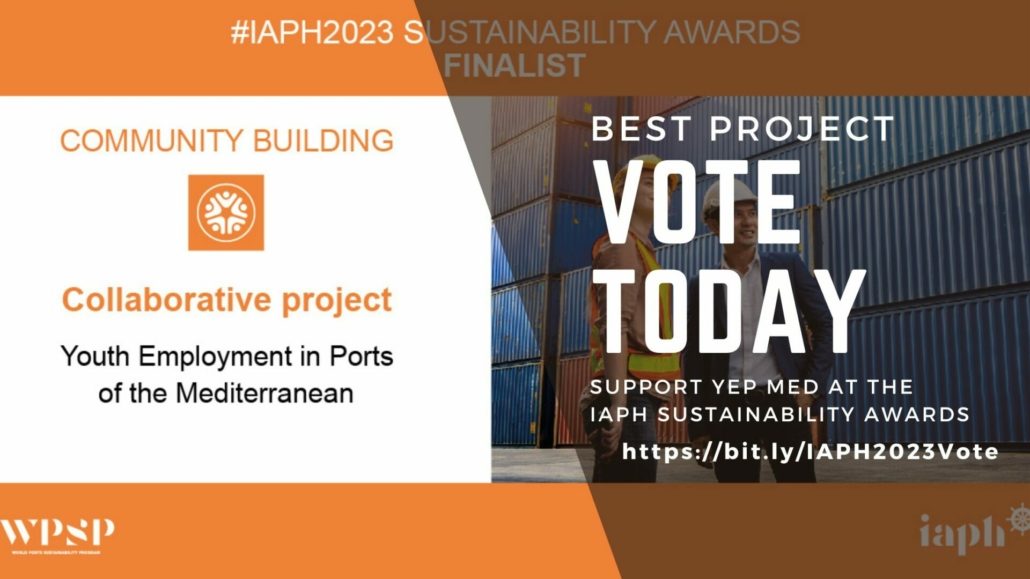
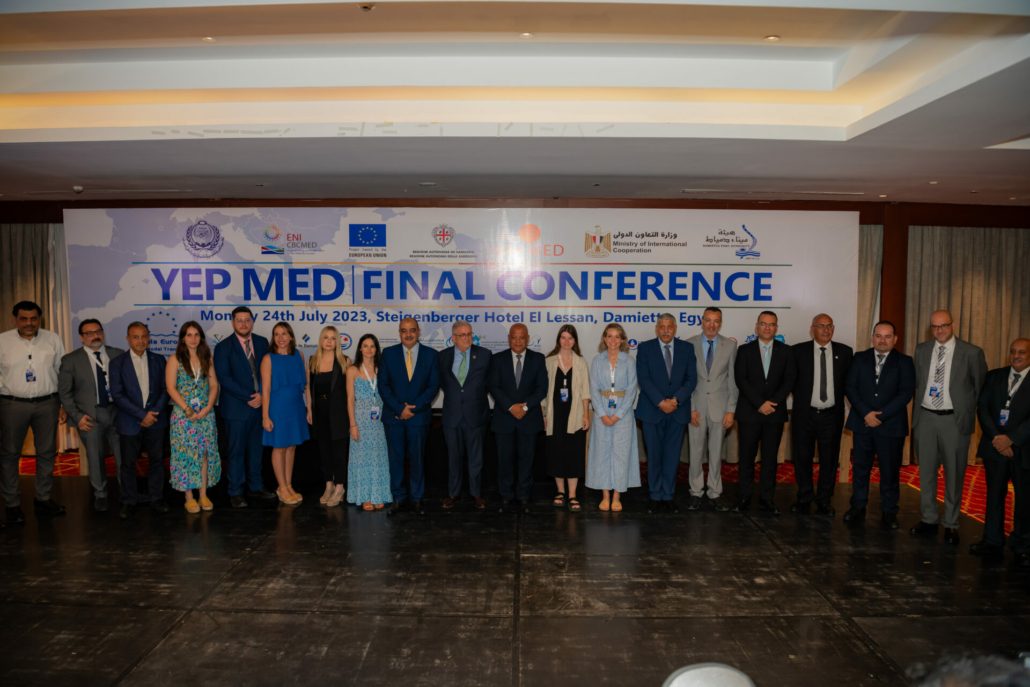
YEP MED Featured in Interreg’s 2025 Brochure on Transnational Cooperation

We’re happy to announce that the YEP MED project has been featured in the latest official Interreg publication titled “Fostering collaboration beyond borders: discover the power of Interreg transnational cooperation.”

Published in March 2025, this comprehensive brochure highlights 13 outstanding initiatives from across Europe and its neighbouring regions. Each featured project was chosen to represent one of the Interreg cooperation programmes. YEP MED—Youth Employment in Ports of the Mediterranean—was selected as the flagship example for Interreg NEXT MED, underscoring its success in creating opportunities for young people in the Mediterranean logistics sector.

The article, found on page 13 of the digital flipbook, showcases YEP MED’s unique approach to enhancing youth employability through practical training, digital innovation, and cross-border collaboration. The project brings together public authorities, educational institutions, and private companies to address skills gaps in the port and logistics industry—contributing to a more connected, inclusive, and competitive region.

YEP MED’s recognition by Interreg is a testament to the dedication of its partners across multiple countries and the tangible impact the programme has had on students and jobseekers. It also reflects the power of transnational cooperation in solving regional challenges through shared knowledge, coordinated actions, and mutual support.

You can view the full brochure online here (YEP MED is on page 13): Fostering collaboration beyond borders.

Through initiatives like YEP MED, Escola Europea continues its mission to promote sustainable transport and professional development across the Mediterranean. Stay tuned for more project updates and success stories that reflect our commitment to quality education and cooperation.

Bridging Shores, Empowering Minds: Escola Europea Showcases Innovation and Education at LogisMed Casablanca

From 13 to 15 May 2025, the Escola Europea – Intermodal Transport brought its vision for a smarter, more connected logistics ecosystem to Casablanca, taking part in the 12th edition of LogisMed — Morocco’s largest logistics fair. The Foire Internationale de Casablanca became a vibrant crossroads of cultures and ideas, where port communities, innovators, and educators came together to imagine the logistics of tomorrow.

Representing the Escola were Alessia Mastromattei, Country Manager for Italy, and Oumkhelthoum Imigine, Projects Coordinator, who carried with them not just tools and brochures — but stories, partnerships, and a mission. At the Escola’s stand — shared with long-standing partners from the ports of Genoa, Palermo, Rome, and Barcelona, as well as Grimaldi Lines and GNV — visitors were welcomed into a Mediterranean alliance built on collaboration between public and private sectors. A living example of what it means to work across borders, languages, and perspectives.

The spotlight was on the Port Virtual Lab (PVL) — an innovative simulator developed by the Escola to bring logistics education into the digital age. Through gamified experiences and real-world scenarios, PVL helps young talents and professionals gain practical insights into port operations and supply chain management. It’s not just a tool — it’s a bridge between classrooms and quaysides.

“What struck me the most at LogisMed was the energy — the genuine curiosity of students, the passion of educators, and the openness of industry leaders ready to collaborate across borders,” said Alessia Mastromattei. “Every conversation felt like a doorway to something new. We didn’t just present our tools — we connected with people who believe, like us, that education is the engine of transformation in the logistics world.”

For the Escola, events like LogisMed are more than just exhibitions — they are a testament to its core values: training, innovation, and cross-border cooperation. With every fair, course, and connection, the Escola reaffirms its commitment to empowering the next generation of logistics professionals — equipping them with the tools, networks, and inspiration they need to transform the sector.

A Decade of Impact: ARETÉ Awards honour key figures behind Forma’t al Port

On the occasion of the 10th anniversary of the Forma’t al Port programme, the Escola Europea – Intermodal Transport, together with the Barcelona Port Community, recognised two individuals whose vision and dedication were instrumental in shaping its success. On 15 May 2025, Mr Joaquim Cabané and Ms Marisa Clavero received the ARETÉ – EXCELLENCE awards in honour of their outstanding contributions to the programme and the wider logistics-port education ecosystem.


Joaquim Cabané: Architect of Collaboration

Mr Joaquim Cabané was honoured for his decisive role in the creation and development of the Training and Employment Working Group under the Governing Board of the Port of Barcelona, as well as for his contributions to the Forma’t al Port programme.

From the very beginning, Mr Cabané provided consistent, rigorous, and generous leadership. As Chair of the Working Group, he brought a global vision shaped by his extensive experience at the helm of Coma i Ribas, a company that spans nearly all professional profiles within the logistics-port sector.

He undertook his responsibilities with a constructive and exemplary spirit. His active engagement included personally visiting training centres to encourage their participation in the programme, thereby strengthening the link between education and industry.

Under his leadership, the Working Group became a true space for collaboration among public institutions, companies, and educational centres. Simultaneously, Forma’t al Port grew into a benchmark initiative, recognised both locally and beyond.

The award was presented by Mr José Alberto Carbonell, President of the Port of Barcelona.


Marisa Clavero: A Legacy of Educational Innovation

Ms Marisa Clavero received the ARETÉ – EXCELLENCE award in recognition of her lifelong dedication to educational excellence and her pioneering role in shaping maritime and intermodal transport training.

Her involvement preceded the launch of Forma’t al Port, as she was instrumental—through her work at eCAT Lluïsa Cura and with the support of its director, Maria Creus—in promoting the participation of higher vocational training centres in European intermodality initiatives, such as the Marco Polo Programme.

Ms Clavero consistently demonstrated an insatiable curiosity and a deep enthusiasm for discovering new methodologies and tools for her students. She approached each new challenge with remarkable generosity, tenacity, and a constructive spirit.

She played a vital role in the development of both Forma’t al Port and the Port Virtual Lab – two milestones that would not have been achieved without her vision and commitment.

As she enters a new chapter in her career, the Escola expressed its deepest appreciation through this award, highlighting her enduring legacy and impact.

The award was presented by Mr Eduard Rodés, Director of the Escola Europea – Intermodal Transport.


Recognising Excellence among Forma’t al Port Collaborators

In addition to the presentation of the ARETÉ – EXCELLENCE awards, the ceremony also served as a heartfelt tribute to all those who have played a pivotal role in the growth and evolution of Forma’t al Port over the past decade. From institutional partners and educators to industry mentors and collaborators, each individual and organisation recognised during the event has contributed to transforming the programme into a flagship initiative for vocational training and professional development in the port and logistics sectors.


About the ARETÉ – EXCELLENCE Award

Since its foundation, the Escola has upheld a symbol of quality to distinguish those individuals and institutions whose work and commitment have supported its educational mission. Inspired by the classical Greek concept of areté—the pursuit of excellence in physical, intellectual, and moral dimensions—the ARETÉ awards were created to formalise this recognition.

The ARETÉ – EXCELLENCE distinction is conferred on training centres, institutions, and their representatives or collaborators who exemplify these values and have contributed decisively to the development of the Escola’s programmes.

What makes artificial intelligence unique in the port logistics sector?

In this #DidYouKnow blog post, we explore how artificial intelligence adapts to the specific needs of the logistics and port industry, and how it can improve the management of people, operations, and administrative processes in these highly specialized environments.

The Digital Revolution Is Reaching Our Ports

In recent years, ports have evolved from being just points of entry and exit for goods into living labs for technological innovation. Digital transformation is reshaping the rules of the game in transport and logistics—and one of the most powerful and promising developments is the rise of artificial intelligence (AI).

From predictive systems to process automation tools, AI is proving its value in enhancing operational efficiency. But when it comes to the logistics-port environment, AI applications take on very specific characteristics that are worth exploring.

What Makes AI in Logistics and Port Transport So Unique?

Unlike other sectors, logistics and port transport involve:

  • Complex, highly regulated operational environments
  • Constant interaction between multiple actors (authorities, freight forwarders, terminal operators, shipping lines…)
  • Real-time processing of vast amounts of data
  • A critical need for speed, efficiency, and traceability

AI can help address many of these challenges. Whether optimizing routes and fleet management, predicting demand, or automating customs documentation, its applications are growing fast.

But What About People Management?

When we talk about AI in logistics, we tend to think about automating physical processes. But AI is also reshaping how we manage people across the sector.

In an environment where technical profiles are in high demand and staff turnover is high, using tools that support onboarding, motivation, and talent retention can make a substantial difference.

Generative AI, for example, can:

  • Create personalized training content
  • Automate responses to frequently asked employee questions
  • Analyze performance and workplace climate in real time

Escola Europea’s Commitment

At Escola Europea – Intermodal Transport, we believe digitalization is not just a trend—it’s a strategic imperative for the present and future of the port logistics sector.

Our long-standing experience in intermodal training has allowed us to observe how technology is reshaping the operations, management, and culture of logistics organizations across the Mediterranean and beyond.

That’s why, years ago, we launched initiatives like the Port Virtual Lab, a pioneering digital simulator for hands-on training in international trade and port logistics. But we haven’t stopped there.

We’re now integrating generative AI (GAI) content into several of our training tracks:

  • Marketing and sales
  • People and talent management
  • Financial decision-making and automation of administrative processes
  • Planning and optimization of port and logistics operations

Our goal is clear: empower logistics and port professionals to lead digital transformation with an ethical, strategic, and hands-on mindset.

Because digital transformation isn’t just about adopting tools—it’s about rethinking how we manage, learn, and lead.

Conclusion: A Transformation That Begins with People

In a world where technology evolves at breakneck speed, its true value lies in how we apply it. AI alone doesn’t transform organizations—people do.

That’s why, in port logistics, training is essential. Understanding how AI works in our industry helps us ensure a digital future that’s both meaningful and responsible, built around real challenges and real people.

A 2,000-Year Journey: A Roman Amphora Arrives at the Escola Europea’s classroom

At the Escola Europea – Intermodal Transport, we are always exploring new ways to make education immersive and meaningful. This week, we took a symbolic leap into the past with the addition of a unique historical artifact to our training space: an original Roman amphora recovered from the Illes Formigues I shipwreck site off the coast of Palamós.

Thanks to a collaboration with the Consorci de les Drassanes Reials i Museu Marítim de Barcelona, the amphora has been entrusted to the Escola in a renewable four-year loan. It is now on display in the Aula dels Estels, located in the Drassanes terminal of the Port of Barcelona—one of our main training classrooms.

Intermodality Across Millennia

This ovoid amphora (Haltern 70 type, small/early variant) now forms part of our Forma’t al Port training programme, which covers port terminal operations, intermodal transport, and logistics. By integrating this ancient container into our teaching, we aim to draw a direct line between past and present logistics practices.

Amphorae were once standardised cargo transport vessels, not unlike today’s containers or semi-trailers. Their use in the ancient Mediterranean is a powerful reminder that intermodality has deep historical roots.

Logistics in Service of Heritage

The transfer and installation of the amphora were managed with utmost care by TM2, a company specialising in industrial packaging solutions. Their team designed a custom-built security box, applied specialist protective materials, and arranged safe transport from the Maritime Museum to our facility—ensuring the artifact’s integrity throughout the journey.

This operation highlights how modern logistics can support the preservation and dissemination of cultural heritage.

The “Amphora Operation” is more than a symbolic gesture—it reflects our commitment to educational innovation, sustainability, and the dialogue between ancient wisdom and modern logistics.

A Milestone Event

To mark the arrival of the amphora, an official event was held at the Drassanes terminal with representatives from all participating organisations:

  • Enric García, Director, Museu Marítim de Barcelona
  • Eduard Rodés, Director, Escola Europea
  • Francesc Bonada, Head of Organisation and Sustainability, Port of Barcelona
  • M. Dolors Jurado Jiménez, Head of Collection Management, Museu Marítim
  • Mònica Jiménez, Director, TM2
  • Marta Miquel, BDO, Escola Europea
  • Reyes Durá, Head of Administration, Escola Europea
  • Carmen Sánchez, Sustainability Officer, Port of Barcelona

From Ancient Markings to Modern Maps

Beyond exhibition purposes, this initiative opens new avenues for education and research. The Escola will explore ancient systems of identification and sealing used on amphorae—historical equivalents to modern tracking codes and security seals.

In parallel, our team will investigate ancient amphora production sites near Barcelona, developing maps and infographics that visualise their commercial networks and manufacturing footprint in antiquity.